A no-buy challenge means committing to purchase only essentials — groceries, rent, utilities, medications — for a defined period while eliminating discretionary spending on clothing, home goods, entertainment, and impulse buys. The most common reason people fail is not lack of willpower: it is starting without a written definition of what counts as “essential,” which leads to gradual rules erosion that feels justified in the moment.
Why No Buy 2026 Is Different From Past Frugality Trends
The no-buy movement has been building since 2024, but 2026 has a distinct economic backdrop that makes the challenge both more urgent and more difficult. The Bureau of Labor Statistics reports average US household spending hit $78,535 in 2024 — and that was before tariffs took hold.
By early 2026, average tariffs on US apparel imports had reached 35.1%, the highest level in decades. Yale Budget Lab estimates these tariffs add roughly $700 per household in 2026 costs. Clothing prices are projected to rise 21% in the short term. Electronics and appliances are also up. The math is stark: the things you might buy on impulse cost significantly more than they did eighteen months ago.
Against this backdrop, 57% of Americans now report living paycheck to paycheck (MarketWatch). Reddit’s r/NoBuy community has passed 70,000 members. Google searches for “no spend challenges” are up 40% year over year. This is no longer a niche frugality trend — it is a measurable behavioral response to financial pressure.
The Two Problems That Derail Every No-Buy Attempt
Problem 1: Undefined Rules
“I am going to stop buying unnecessary things” is not a no-buy rule. It is an intention without a boundary. Intentions bend under pressure; rules hold.
Before day one, you need a written list covering:
- Exactly what is allowed: Groceries (with a weekly budget cap), rent, utilities, fuel, prescription medications, scheduled healthcare, pet food.
- Exactly what is banned: Clothing, shoes, home décor, gadgets, cosmetics, dining out, entertainment subscriptions beyond your current ones, Amazon impulse orders.
- The replacement rule: A banned category item may be replaced only when it is completely non-functional. Boots with a broken sole = replacement allowed. Boots that are fine but unfashionable = not allowed.
Write this list. Share it with someone. The act of writing it down is what makes a no-buy challenge different from a general intention to “spend less.”
Problem 2: Definitional Drift
Definitional drift is the quiet process by which “essential” expands to include things that are convenient, habitual, or emotionally soothing. It looks like this:
- Week 1: You allow yourself groceries.
- Week 3: “Whole Foods run” becomes “also grabbing that candle I like.”
- Week 6: “I need new running shoes — I run twice a week and my old ones are a year old.”
None of these feel like cheating in the moment. Each feels justified. Cumulatively, they hollow out the challenge.
The antidote is a 48-hour rule: any unplanned purchase over $25 requires a 48-hour wait. Not because you can never buy it, but because most impulse justifications evaporate within 48 hours. Research on impulse buying shows FOMO drives roughly 60% of unplanned purchases — and FOMO has a half-life of about two days.
How to Set Up Your No-Buy Tracking System
Tracking is not optional for a no-buy challenge — it is the mechanism. Without data, you cannot distinguish between “I stayed on track this month” and “I think I stayed on track but I’m not sure about those few things.”
Map Your Spending Before You Start
Before the challenge begins, review your last 90 days of spending and categorize every transaction. You need to know your baseline across these five areas:
| Category | Your current monthly average | Challenge status |
|---|---|---|
| Groceries / household supplies | $__ | Allowed (set a cap) |
| Clothing / shoes | $__ | Banned |
| Home goods / décor | $__ | Banned |
| Dining out / delivery | $__ | Banned |
| Entertainment / subscriptions | $__ | Existing ones allowed; no new ones |
This baseline serves two purposes: it sets realistic expectations for how much you will actually save, and it surfaces the categories where you are most likely to slip.
Log Every Transaction Manually
Automated bank syncing is convenient, but it is the wrong tool for a no-buy challenge. When your bank app automatically categorizes a $34 Amazon order as “shopping,” you experience it as a passive record. When you manually enter that $34 into a tracking app, you experience it as a decision you are now accounting for.
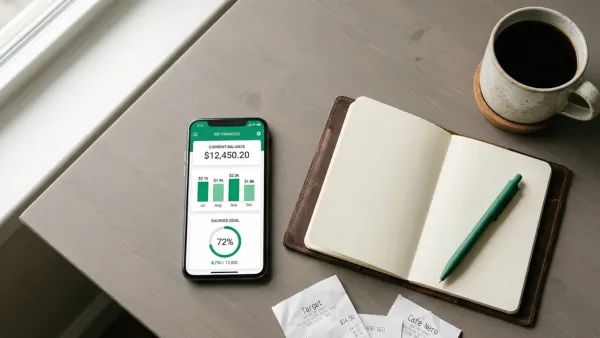
Manual entry creates intentional friction — the same friction that makes the challenge effective. The 15 seconds it takes to open Tefteri, tap the amount, and assign a category is a 15-second pause between “I just spent money” and “I have rationalized it.” That pause catches drift.
Weekly Check-In Ritual
Set a 15-minute weekly review, same day, same time. Look at three numbers:
- What did I spend in banned categories this week?
- What did I spend in allowed categories — and did anything feel like a rule bend?
- What is my total spend versus my pre-challenge average?
The third number is your scorecard. But the first two are what tell you if the challenge is actually working as designed, or just working on paper.

The Spending Triggers You Need to Plan For
95% of purchase decisions involve emotional factors, according to consumer psychology research. The no-buy challenge does not eliminate your emotions — it asks you to notice them before acting on them. Here are the four most common spending triggers and how to plan around them:
Stress and Decompression Shopping
Retail therapy is real: shopping releases dopamine. When you ban the behavior, you need a substitute decompression habit ready. Identify two or three free activities that decompress you — a walk, a call with a friend, a workout — and have them on a literal list when the urge hits.
Boredom Browsing
Scroll the feed, see an ad, click, buy. This loop is engineered. Unsubscribe from every retailer marketing email. Delete shopping apps from your phone’s home screen. The friction you add to the starting point of the loop matters.
Social Pressure
Group dinners, bachelorette weekends, birthday gifts, “just quick grab coffee” — these are the situations where no-buy rules get the most pushback from people around you. Decide in advance how you handle each: say no, suggest alternatives (host at home vs. restaurant), or identify which social spending you will carve out as an exception — and write it down before the challenge starts.
Celebration and Reward
You hit a work milestone. You finished a hard week. The reflexive response is to buy something. Build in alternative rewards: experience-based (a movie at home, a long hike) rather than purchase-based. This rewires the habit loop rather than just suppressing it.
What You Will Actually Save
Using BLS baseline data: the average American household spends roughly $2,001 per year on clothing and footwear — about $167/month. Add an estimated $150–300/month in dining out, $50–100 in home goods, and $30–80 in impulse purchases. A genuine 6-month no-buy challenge targeting these categories could realistically save $2,500–$4,000 for a household.
With apparel prices up 21% due to tariffs, stretching existing clothing another season means avoiding those increases entirely. The math is more compelling in 2026 than it was in 2024.
Tefteri tracks your spending across categories without connecting to your bank — the app stays local on your phone, which matters when your challenge is built around mindful, friction-based spending rather than automated logging. After the challenge ends, your 6-month view shows exactly where the savings came from, which tells you what you actually did and did not miss.
For context on related intentional-spending trends, see our piece on loud budgeting and how publicly stating financial limits became normalized in 2025–2026. And if you want to audit where your existing spend is leaking, subscription creep is often the first place 2026 no-buyers find surprise savings.
Tefteri is a personal finance app for iPhone that helps you track expenses, income, and subscriptions — stored locally on your device, with no bank linking required, and designed for intentional, privacy-first financial management.
Frequently Asked Questions
What counts as “essential” in a no-buy challenge?
Essentials are expenses you cannot go without: groceries, rent or mortgage, utilities, fuel for commuting, prescription medications, and existing recurring bills you committed to before the challenge. Everything else — clothing, home décor, dining out, entertainment, beauty products, gadgets — is discretionary and should be banned. The key is to write your specific list before day one, because definitions that feel obvious at the start become ambiguous when you are standing in a store.
How is No Buy 2026 different from just having a budget?
A budget sets limits per category. A no-buy challenge eliminates entire categories. The psychological difference is significant: deciding whether to spend $80 or $120 on clothes this month involves ongoing negotiation with yourself. Deciding that you will not buy clothes at all removes that negotiation entirely. Many people find the binary structure easier to maintain than a spending cap.
What should I do when I slip up?
Note it, categorize it, and continue. One slip does not restart the clock or invalidate the challenge. The goal is a dramatic reduction in discretionary spending, not a perfect record. If you slip three times in a week in the same category, that is a signal: either your rules for that category need renegotiating (maybe it was not actually discretionary for you) or your trigger plan for that situation needs work.
How do I handle gifts, events, and social spending?
Decide in advance. Before the challenge starts, identify upcoming social obligations — weddings, birthdays, travel — and either budget for them explicitly as allowed exceptions, or find workarounds (homemade gifts, potluck contributions). The worst time to negotiate a no-buy exception is in the moment, surrounded by social pressure.
How long should a no-buy challenge last?
Start with 30 days to test your rules. A full 3-month or 6-month challenge is where the real savings accumulate and where spending habits actually change. Some participants extend to a full year, but the behavioral shift typically happens by month three — you have either built new habits or identified which exceptions genuinely matter to your quality of life.