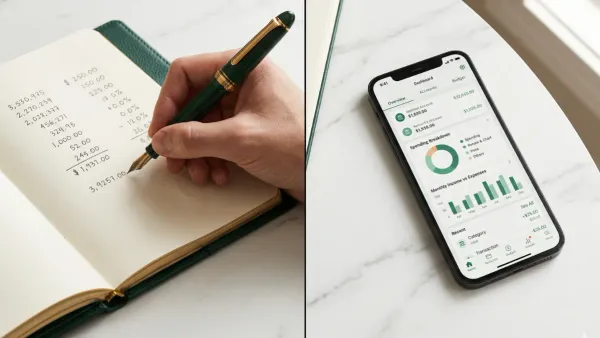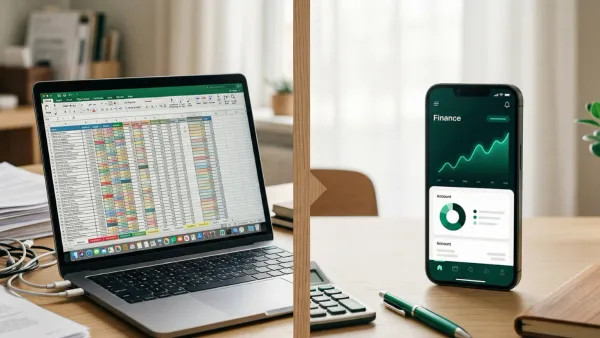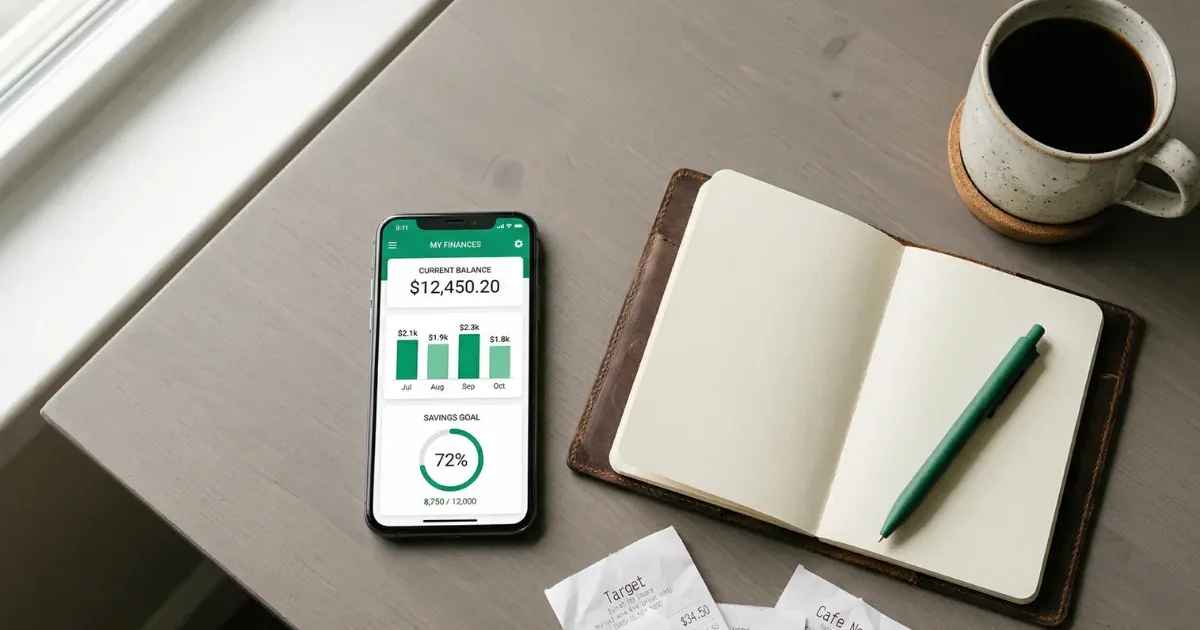
Tracking your expenses means recording every purchase, bill, and payment so you can see exactly where your money goes. The most effective way to start is to choose one method — an app, a spreadsheet, or pen and paper — and log every transaction for 30 days without trying to change your spending habits first.
Why Tracking Expenses Is the Single Most Important Financial Habit
Most people overestimate how well they understand their own spending. Research from the Bureau of Labor Statistics consistently shows that Americans underestimate their monthly expenses by 20 to 40 percent. That gap between what you think you spend and what you actually spend is where financial stress lives.
Expense tracking closes that gap. When you record every purchase, three things happen:
- Awareness replaces guessing. You stop relying on a vague sense of where money went and start working with real numbers.
- Patterns become visible. You notice that Tuesday lunches out cost you $180 a month, or that subscription services have crept up to $300 without you realizing it.
- Decisions get easier. When you can see that cutting one habit frees up $200 a month, the choice becomes concrete rather than abstract.
Expense tracking is not about restriction. It is about information. The goal is not to feel guilty about a coffee purchase. The goal is to make sure your spending reflects your actual priorities.
What Method Should You Use to Track Expenses?
There is no single best method. The right choice depends on how much time you want to invest, how detailed you want your data to be, and whether you prefer automation or hands-on control. Here are the main approaches:
Manual tracking (pen and paper or notes app)
You write down every purchase as it happens. This is the oldest method, and it works because the physical act of recording a purchase forces you to pause and acknowledge the expense.
Best for: People who want maximum awareness and do not mind spending two to three minutes a day on logging.
Spreadsheet tracking
You build or download a spreadsheet (Google Sheets, Excel, or similar) and enter your transactions regularly — daily, or in a weekly batch. Spreadsheets offer flexibility: you can create custom categories, build formulas, and visualize data with charts.
Best for: People who enjoy organizing data and want full control over categories and calculations. If you are considering this path, you may also want to read about moving from spreadsheets to dedicated apps.
Dedicated expense tracking apps
Purpose-built apps let you log transactions quickly, categorize spending, and view reports without building anything yourself. Some apps connect to your bank accounts for automatic import; others keep everything local and manual for privacy.
Best for: People who want speed, convenience, and visual reports without spreadsheet maintenance.
Bank and credit card statements
You review your monthly statements and categorize spending after the fact. This is the least effort up front, but it means you only see the full picture once a month — and categorization can be tedious.
Best for: People who want minimal daily effort and are comfortable with delayed feedback.
Comparison of Expense Tracking Methods
| Method | Daily Time | Setup Effort | Detail Level | Awareness Impact | Privacy |
|---|---|---|---|---|---|
| Pen and paper | 2-3 min | None | High | Very high | Full control |
| Spreadsheet | 5-10 min | Medium | Very high | High | Full control |
| Manual app | 1-2 min | Low | High | High | Varies by app |
| Bank-linked app | 0 min | Medium | Medium | Medium | Shares bank data |
| Statement review | 15-30 min/month | None | Medium | Low | Full control |
How to Start Tracking Expenses: A Step-by-Step Process
Step 1: Pick one method and commit to 30 days
Do not spend a week evaluating every app on the market. Pick the method that appeals to you most and commit to using it for 30 days. You can always switch later. The important thing is to start.
If you are unsure, start with a simple notes app on your phone. Open it after every purchase and type the amount and a one-word description. That is enough.
Step 2: Define your categories
Keep your categories broad at first. Five to eight categories are plenty for the first month:
- Housing (rent, mortgage, utilities, repairs)
- Transportation (fuel, transit, parking, car payments)
- Food (groceries, restaurants, coffee, delivery)
- Subscriptions (streaming, software, memberships)
- Personal (clothing, health, entertainment, gifts)
- Bills (insurance, phone, internet)
- Savings / Investments
- Other
You can always add subcategories later. Starting with too many categories creates friction and makes you more likely to quit.
Step 3: Record every transaction the same day
The golden rule of expense tracking is: log it today. Not tomorrow. Not at the end of the week. The longer you wait, the more transactions you forget, and the less accurate your data becomes.
Set a daily reminder for the evening — five minutes before bed is enough. Review your day, check your wallet and phone for purchases, and log anything you missed.
Step 4: Do not judge your spending for the first month
This is critical. For the first 30 days, your only job is to record. Do not try to cut back. Do not feel bad about numbers. Just observe.
The reason is psychological: if you start restricting immediately, you associate expense tracking with deprivation, and you quit. If you observe first, you build the habit on curiosity rather than guilt.
Step 5: Review your first month and find one surprise
At the end of 30 days, sit down and look at your totals by category. Almost everyone finds at least one surprise — a category where they spent significantly more than they expected.
That surprise is your first actionable insight. You do not need to overhaul your entire budget. Just pick one thing that surprised you and decide whether you want to change it.
How to Build the Expense Tracking Habit for Good
Starting is easy. Continuing past the first month is where most people fail. Here is what separates people who track expenses for life from those who quit after six weeks:
Make it frictionless
Every second of friction reduces the chance you will log a transaction. If your method requires opening a laptop, navigating to a spreadsheet, and entering data into specific cells, you will stop doing it on busy days. If it requires tapping your phone twice and typing a number, you will do it even when tired.
Choose tools that minimize the gap between “I just bought something” and “it is recorded.”
Attach it to an existing habit
Habit stacking works. Pair expense logging with something you already do daily:
- Log expenses while your morning coffee brews
- Review the day’s spending while brushing your teeth at night
- Enter transactions during your commute (if you are not driving)
Use weekly reviews as motivation
Set a 15-minute weekly review every Sunday. Look at your week’s spending, compare it to the previous week, and notice trends. This review gives you a regular feedback loop that keeps the habit meaningful.
Accept imperfection
You will forget transactions. You will miscategorize things. You will skip a day or two. None of that matters. An expense tracker that captures 90 percent of your spending is infinitely more useful than one you abandoned because it was not perfect.
Common Expense Tracking Mistakes (and How to Avoid Them)
Mistake 1: Tracking only big purchases
People often skip transactions under $10 or $15, thinking they do not matter. But small purchases add up fast. Five dollars here and eight dollars there can easily total $300 to $500 a month. Track everything, especially the small stuff.
Mistake 2: Using too many categories
Twenty-five categories might seem thorough, but they create decision fatigue every time you log a purchase. “Was that coffee a Food expense or a Personal expense?” Keep it simple. You can always refine later.
Mistake 3: Not reviewing the data
Tracking without reviewing is like taking notes in a class you never study for. The value is not in the recording — it is in the patterns you discover when you look back. Schedule your reviews.
Mistake 4: Trying to track jointly without a system
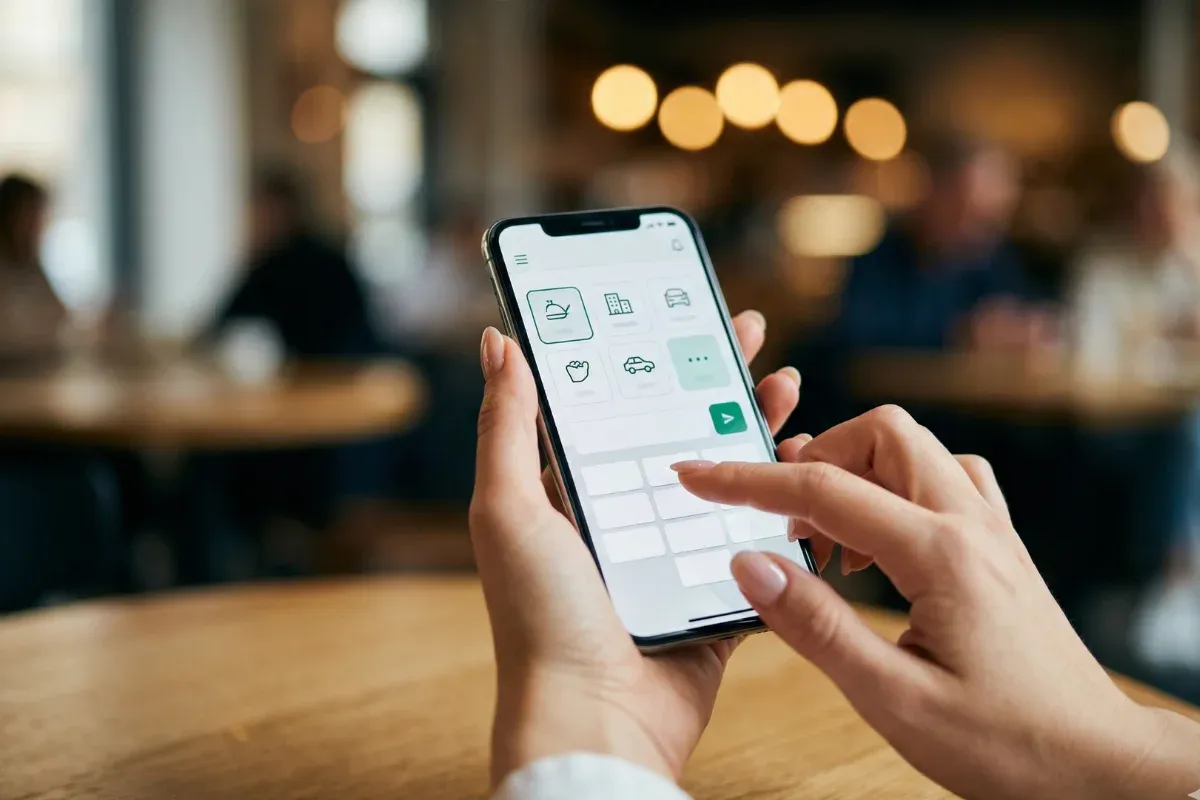
If you share finances with a partner, you need a shared system from day one. Two separate trackers that never sync will give you an incomplete picture. Agree on one tool and one set of categories. Apps like Tefteri that organize expenses by domain — housing, vehicles, personal, subscriptions — can make shared tracking more intuitive because both partners use the same structure.
Mistake 5: Giving up after a bad month
A month where you overspent is not a failure of tracking. It is tracking doing its job. The data showed you something real. The only failure is stopping.
When Should You Move Beyond Basic Tracking?
Once you have tracked consistently for two to three months, you will naturally start wanting more from your system. Here are signs you are ready to level up:
- You want to set spending limits by category
- You want to see trends over time, not just monthly totals
- You want to compare months or see year-to-date summaries
- You want to separate income tracking from expense tracking
- You want to share financial visibility with a partner
At this point, consider upgrading to a dedicated finance app that supports multiple domains, trend charts, and period comparisons. This is also a good time to explore different budgeting methods to pair with your tracking habit.
The Connection Between Tracking and Saving
Expense tracking does not automatically save you money. But it creates the conditions for saving by making your spending visible and intentional.
Studies on financial behavior consistently show that people who track expenses save 10 to 15 percent more than those who do not — not because tracking forces them to save, but because awareness changes behavior naturally.
When you see that you spent $420 on food delivery last month, you do not need a rule telling you to cook more. The number itself shifts your behavior.
Tools and Resources for Getting Started
| Need | Free Option | Paid Option |
|---|---|---|
| Quick daily logging | Phone notes app | Dedicated expense app |
| Detailed categorization | Google Sheets template | Finance app with domains |
| Visual reports and trends | Spreadsheet charts | App with built-in analytics |
| Subscription auditing | Bank statement review | Subscription tracker |
| Shared household tracking | Shared spreadsheet | Multi-user finance app |
Whatever you choose, remember: the best expense tracker is the one you actually use. Tefteri, for example, takes a domain-based approach — organizing finances into clear sections like housing, vehicles, and subscriptions — which can help if you find flat category lists overwhelming. But the tool matters less than the consistency.
Tefteri is a personal finance app for iPhone that helps you track expenses, income, and subscriptions — organized by category, stored locally on your device, and designed to make financial clarity effortless.
Frequently Asked Questions
How long does it take to see results from tracking expenses?
Most people notice meaningful patterns within the first 30 days. You will likely find at least one spending category where you are spending significantly more than you expected. Real behavioral changes — spending less in certain areas, saving more consistently — typically emerge after two to three months of consistent tracking.
Should I track expenses daily or weekly?
Daily tracking is more accurate and builds a stronger habit. When you log transactions at the end of each day, you rarely forget purchases. Weekly tracking works for some people, but you will typically miss 10 to 20 percent of smaller transactions. If weekly is all you can manage, it is still far better than not tracking at all.
What is the best app for tracking expenses in 2026?
There is no universal best app because the right choice depends on your priorities. If you want bank automation, look for apps with account linking. If you value privacy and want your data stored locally on your device, look for local-first apps that do not require sharing bank credentials. The most important factor is whether the app’s workflow fits your daily routine.
Do I need to track cash purchases too?
Yes. Cash purchases are the most commonly forgotten transactions, and they can represent a significant portion of your spending. If you use cash regularly, make it a habit to log cash purchases immediately — before the receipt goes into your pocket and the amount leaves your memory.
Can tracking expenses actually help me get out of debt?
Expense tracking is one of the most effective tools for debt reduction. It helps you identify non-essential spending that can be redirected toward debt payments. Many people discover $200 to $500 in monthly spending they can reduce without significantly impacting their quality of life. Combined with a structured budgeting method, tracking accelerates debt payoff by making your available surplus visible and concrete.