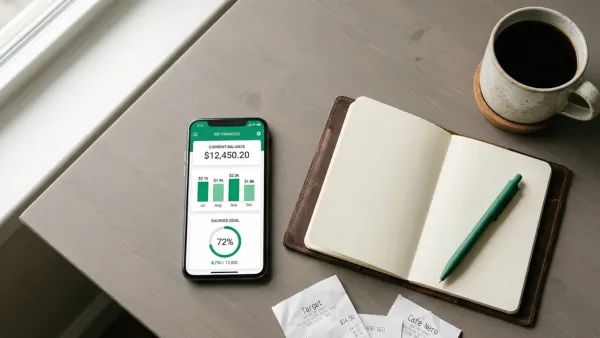
The five most effective budgeting methods are the 50/30/20 rule, zero-based budgeting, the envelope method, pay-yourself-first, and the anti-budget. The best choice depends on your income stability, how much time you want to spend managing money, and whether you prefer detailed control or a hands-off approach.
Why Most People Fail at Budgeting (and How the Right Method Fixes That)
The problem with budgeting is rarely willpower. It is fit. Most people try one method — usually whatever they saw recommended first — and when it feels tedious or restrictive, they assume they are “bad at budgeting” and stop entirely.
In reality, budgeting methods vary enormously in how much effort they require, how much control they offer, and what personality type they suit. A detail-oriented person who enjoys spreadsheets will thrive with zero-based budgeting and feel lost with an anti-budget. A busy parent who hates financial admin will abandon zero-based budgeting in a week but succeed with pay-yourself-first for years.
The goal of this guide is to help you match your temperament and lifestyle to a method that will actually stick. We will cover each method in depth, compare them side by side, and help you choose — or combine — the approach that fits your life.
The 50/30/20 Rule
How it works
The 50/30/20 rule divides your after-tax income into three buckets:
- 50% for needs: Housing, utilities, groceries, insurance, minimum debt payments, transportation — anything you cannot avoid.
- 30% for wants: Dining out, entertainment, hobbies, subscriptions, travel — things you enjoy but could live without.
- 20% for savings and debt: Emergency fund contributions, retirement savings, extra debt payments beyond minimums.
You do not need to track every transaction in detail. You just need to make sure your spending stays within these three broad allocations.
How to implement it
- Calculate your monthly after-tax income.
- Multiply by 0.50, 0.30, and 0.20 to get your three bucket limits.
- Categorize your current spending into needs, wants, and savings.
- Adjust if any bucket is over its limit — usually by trimming wants.
- Review monthly to make sure the ratios hold.
Who it is best for
The 50/30/20 rule works well for people with stable, predictable income who want a simple framework without detailed tracking. It is especially good for beginners who feel overwhelmed by more granular methods.
Where it falls short
The 50% needs allocation is unrealistic in high-cost-of-living cities where rent alone can consume 40 percent of income. And the broad categories mean you do not get visibility into specific spending patterns. You might stay within your 30% wants bucket while still overspending on subscriptions — something you would catch with more detailed expense tracking.
Zero-Based Budgeting
How it works
In zero-based budgeting, you assign every dollar of your income to a specific category before the month begins. Income minus all assigned amounts equals zero — hence the name. Every dollar has a job.
Categories are granular: not just “food” but “groceries,” “restaurants,” “coffee.” Not just “transportation” but “fuel,” “parking,” “car insurance.” At the end of the month, you compare actual spending to your plan and adjust the next month’s budget accordingly.
How to implement it
- List your total expected income for the coming month.
- List every expense category with a specific dollar amount.
- Subtract all categories from income until you reach zero. If there is money left over, assign it to savings or debt.
- Track every transaction throughout the month against its category.
- At month’s end, review overages and shortfalls. Adjust next month.
Who it is best for
Zero-based budgeting suits people who want maximum control and visibility. It is powerful for those paying down debt aggressively, building savings with a specific timeline, or managing irregular income (freelancers, contractors) where every dollar truly needs a plan.
Where it falls short
It is time-intensive. Creating the budget takes 30 to 60 minutes. Tracking throughout the month adds daily effort. If your life is unpredictable — frequent unexpected expenses, variable income — the constant readjusting can feel exhausting. This method rewards discipline and punishes inconsistency.
The Envelope Method
How it works
The envelope method is a tactile, visual system. You create physical envelopes (or digital equivalents) for each spending category and put the budgeted cash amount into each one at the start of the month. When an envelope is empty, you stop spending in that category.
Common envelopes include groceries, dining out, entertainment, clothing, personal care, and gifts. Fixed expenses like rent and utilities are usually handled separately through automatic payments.
How to implement it
- Identify your variable spending categories (the ones where you tend to overspend).
- Set a monthly limit for each category.
- At the start of the month, withdraw cash and distribute it into labeled envelopes.
- Spend only from the relevant envelope for each purchase.
- When an envelope is empty, you are done spending in that category for the month.
For a digital version, some apps let you create virtual “envelopes” or spending pools with hard limits. This preserves the core principle — fixed pools that run out — without requiring cash.
Who it is best for
The envelope method is excellent for people who overspend because money feels abstract. The physical constraint of running out of cash makes limits real in a way that a number on a screen does not. It is also good for visual learners and people who want to involve a partner or family in budgeting.
Where it falls short
It is impractical in an increasingly cashless world. Many purchases happen online, through subscriptions, or via contactless payment. Carrying cash and managing physical envelopes adds friction. The digital versions work, but they lose some of the tactile impact that makes the method effective.
Pay-Yourself-First
How it works
Pay-yourself-first flips the traditional budget on its head. Instead of budgeting what you spend and saving what is left, you save first and spend what is left.
On payday, a predetermined amount is automatically transferred to savings, investments, and debt payments. Whatever remains is yours to spend however you like, with no tracking required.
How to implement it
- Decide on your savings rate. Start with 10 to 20 percent of after-tax income.
- Set up automatic transfers on payday to savings accounts, investment accounts, and extra debt payments.
- What remains in your checking account is your spending money.
- Spend it however you want — no categories, no tracking, no guilt.
- Increase the savings rate by 1 percent every few months as your income grows or expenses decrease.
Who it is best for
This method is ideal for people who hate budgeting but want to build wealth. It works especially well for those with stable income and spending that naturally stays within reasonable limits. If your problem is not overspending but undersaving, pay-yourself-first addresses the root cause directly.
Where it falls short
It provides zero visibility into where your discretionary spending goes. If you have a subscription creep problem or are spending excessively in one category, you will not catch it. It also requires enough income that the remaining amount after savings can comfortably cover necessities — which makes it less viable for lower-income households.
The Anti-Budget
How it works
The anti-budget takes minimalism to its logical extreme. You track only two numbers: income and savings. As long as you are saving your target amount, everything else is irrelevant.
There are no categories, no envelopes, no spreadsheets, no weekly reviews. You set a savings target, automate it, and live your life.
How to implement it
- Determine your one financial metric: your target savings rate (typically 15 to 25 percent).
- Automate savings transfers on payday.
- Pay your fixed bills (also automated).
- Spend the rest without tracking.
- Review once a quarter to ensure your savings rate is on track.
Who it is best for
The anti-budget works for high earners with a large gap between income and essential expenses. It also suits people who have already tracked expenses extensively, understand their patterns, and do not need ongoing granular monitoring. It is a “graduate” method — most effective for people who have already built financial awareness through other approaches.
Where it falls short
It is not a budget at all, which is both its strength and its weakness. Without category-level visibility, it is easy to develop blind spots. You might hit your savings target while accumulating credit card debt or letting expenses grow quietly. It requires financial self-awareness that most people need to build through tracking first.
Side-by-Side Comparison
| Feature | 50/30/20 | Zero-Based | Envelope | Pay-Yourself-First | Anti-Budget |
|---|---|---|---|---|---|
| Setup time | 15 min | 30-60 min | 20-30 min | 15 min | 5 min |
| Monthly effort | Low | High | Medium | Very low | Very low |
| Category detail | Low (3 buckets) | Very high | Medium | None | None |
| Spending visibility | Medium | Very high | High | Low | Very low |
| Best for overspenders | Moderate | Strong | Very strong | Weak | Weak |
| Best for undersavers | Good | Good | Moderate | Very strong | Strong |
| Works with variable income | Poor | Good (with effort) | Good | Moderate | Moderate |
| Partner-friendly | Good | Complex | Very good | Good | Good |
| Beginner-friendly | Very good | Moderate | Good | Very good | Poor |
How to Choose the Right Method for Your Situation
Rather than picking a method based on popularity, match it to your specific situation:
If you have never budgeted before
Start with the 50/30/20 rule. It gives you structure without overwhelming detail. Once you are comfortable with the three-bucket framework, you can add granularity by tracking expenses within each bucket.
If you are paying off debt aggressively
Use zero-based budgeting. The granular control ensures every spare dollar goes toward debt repayment. You will see exactly where money leaks and can redirect it.
If you consistently overspend on discretionary items
Try the envelope method. The hard constraint of a fixed pool — whether physical cash or a digital equivalent — breaks the cycle of “I will spend less next time” that never materializes.
If your income is stable and you mainly want to build wealth
Pay-yourself-first is your method. Automate your savings and stop worrying about the details. This works because your fundamental issue is not overspending — it is under-prioritizing savings.
If you have high income and strong financial awareness
The anti-budget lets you live with minimal financial admin. But be honest with yourself about whether your awareness is genuine. If you do not know within $100 how much you spent on dining out last month, you probably need more structure.
Can You Combine Methods?
Absolutely. In practice, many people use a hybrid approach:
- 50/30/20 + expense tracking: Use the three-bucket framework as guardrails, but track individual transactions for visibility. Apps like Tefteri that organize spending into clear domains — housing, vehicles, personal, subscriptions — make this combination practical without spreadsheet complexity.
- Pay-yourself-first + envelopes: Automate savings, then use envelopes for the categories where you tend to overspend.
- Zero-based budget + pay-yourself-first automation: Plan every dollar, but automate the savings portion so it happens before you can spend it.
The key is to use just enough structure to address your specific weakness without adding so much process that budgeting feels like a second job.
How to Know If Your Budget Is Working
A budget is working if three things are true:
- You are saving consistently. Whatever your target — 10 percent, 20 percent, more — you are hitting it most months.
- You are not accumulating new debt. Credit card balances are stable or declining. You are not borrowing to cover regular expenses.
- You do not feel constant financial anxiety. You have a sense of control, even if you are not wealthy. You know where your money goes and why.
If any of these three are not true, your current method needs adjustment — either in the numbers or in the method itself.
The Most Common Budgeting Mistakes Across All Methods
Setting unrealistic limits
If you currently spend $800 a month on food, budgeting $400 next month is not discipline — it is fantasy. Cut by 10 to 15 percent at a time.
Forgetting irregular expenses
Car registration, annual insurance premiums, holiday gifts, veterinary bills — these are not surprises. They happen every year. Build them into your budget as monthly set-asides.
Not accounting for inflation and lifestyle changes
A budget set in January may not fit by June. Prices change, life circumstances shift, and budgets need to evolve. Review and adjust quarterly at minimum.
Budgeting together but tracking separately
If you share finances with someone, half-measures create confusion. Either budget jointly with shared visibility, or clearly divide financial responsibilities with agreed-upon individual budgets.
Tefteri is a personal finance app for iPhone that helps you track expenses, income, and subscriptions — organized by category, stored locally on your device, and designed to make financial clarity effortless.
Frequently Asked Questions
Which budgeting method saves the most money?
Zero-based budgeting typically produces the highest savings rate because it forces you to assign every dollar intentionally. However, any method that you actually follow will save you more money than a “perfect” method you abandon. Consistency matters more than the specific framework. People who budget consistently — regardless of method — save 15 to 20 percent more than those who do not.
Is the 50/30/20 rule still relevant in 2026?
The 50/30/20 rule remains a useful starting framework, but the exact percentages need adjustment for many people. In high-cost-of-living areas, the 50 percent needs allocation is often too low. Consider it a guideline rather than a rigid rule, and adjust the percentages to match your reality. Some financial planners now suggest 60/20/20 for people in expensive cities.
How do I budget with irregular income?
For irregular income, zero-based budgeting works best — but with a modification. Budget based on your lowest expected monthly income. In months when you earn more, assign the surplus to savings and debt. Build a buffer of one to two months of expenses in your checking account so that low-income months do not force you to skip essentials.
Can I switch budgeting methods mid-year?
Yes, and you should if your current method is not working. There is no benefit to struggling with a method for twelve months “to give it a fair chance.” If you have tried a method for two to three months and it creates more stress than clarity, switch. Your financial data carries over regardless of the framework you use to organize it.
Do I really need a budget if I am not in debt and save regularly?
If you are saving consistently, not accumulating debt, and feel in control of your finances, a detailed budget may not be necessary. But some form of financial awareness is still valuable. At minimum, track your spending periodically — even quarterly — to make sure your good habits have not developed blind spots. The anti-budget approach may be the right fit for your situation.