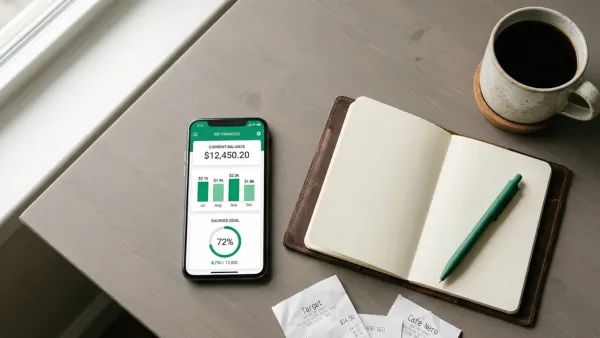
Budgeting on a low income is not about willpower or sacrifice — it is about strategy. When every euro matters, you need a system that accounts for reality: rising costs, unpredictable expenses, and the mental weight of financial stress. These seven strategies are designed for tight budgets, proven by people who have made them work, and built to give you control without demanding perfection.
If you have ever felt that budgeting advice was written for people who already have money, this guide is for you.
Why Traditional Budgeting Advice Often Fails on a Low Income
Most budgeting frameworks assume a comfortable baseline. They tell you to “pay yourself first” or “invest 20% of your income” without acknowledging that some months, the math simply does not add up. When rent, food, and utilities consume nearly everything you earn, the standard advice can feel tone-deaf.
The reality in 2026 is that costs have risen sharply. Tariffs on imported goods have pushed everyday prices higher. Energy costs remain volatile. Grocery bills have climbed steadily since 2022. If your income has not kept pace, you are not failing at budgeting — the environment has become harder.
That is why these strategies focus on what you can control right now, with whatever income you have.
Strategy 1: Track Every Expense First
Before you budget a single euro, you need to know where your money actually goes. Not where you think it goes — where it really goes.
How to start tracking today
For one full month, record every transaction. Every coffee, every bus fare, every streaming subscription auto-renewal. You can use a notebook, a spreadsheet, or an app — the method matters less than the consistency.
What most people discover when they track for the first time:
- Small recurring charges they forgot about (a subscription they never canceled, a service fee they did not notice)
- Category surprises — spending more on takeaway food than groceries, or more on convenience items than they realized
- Timing patterns — spending spikes on weekends, at the beginning of the month, or right after payday
This is not about judgment. It is about information. You cannot optimize what you cannot see.
Making it sustainable
The key to long-term tracking is reducing friction. If writing down every purchase feels exhausting, simplify: check your bank statement once a week and categorize in bulk. Or use an app like Tefteri that lets you log entries quickly on your phone and see exactly where each euro lands.
For a deeper dive into building a tracking habit, see our guide on how to track expenses effectively in 2026.
Strategy 2: Adapt the 50/30/20 Rule for Your Reality
The classic 50/30/20 rule suggests splitting your income into needs (50%), wants (30%), and savings (20%). On a low income, those percentages often need adjustment.
The low-income adaptation
When essentials already consume 70-80% of your income, a more realistic split might look like:
| Category | Standard Rule | Low-Income Adaptation |
|---|---|---|
| Needs (rent, food, utilities, transport) | 50% | 70-80% |
| Wants (entertainment, dining out, hobbies) | 30% | 10-15% |
| Savings / debt repayment | 20% | 5-15% |
The point is not to hit exact percentages. It is to create intentional categories so you know what is essential, what is flexible, and what is building your future — even if that future-building amount is small.
Why even 5% matters
Saving 5% of a low income might feel pointless. But consider: if you earn 1,000 euros per month and save 50 euros, that is 600 euros after a year. That is a car repair. That is a deposit on a better apartment. That is the difference between a crisis and an inconvenience.
The habit of directing money intentionally is more valuable than the amount. Start where you are.
For a full comparison of budgeting frameworks and which works best for different income levels, read our budgeting methods compared guide.
Strategy 3: The Power of Meal Planning
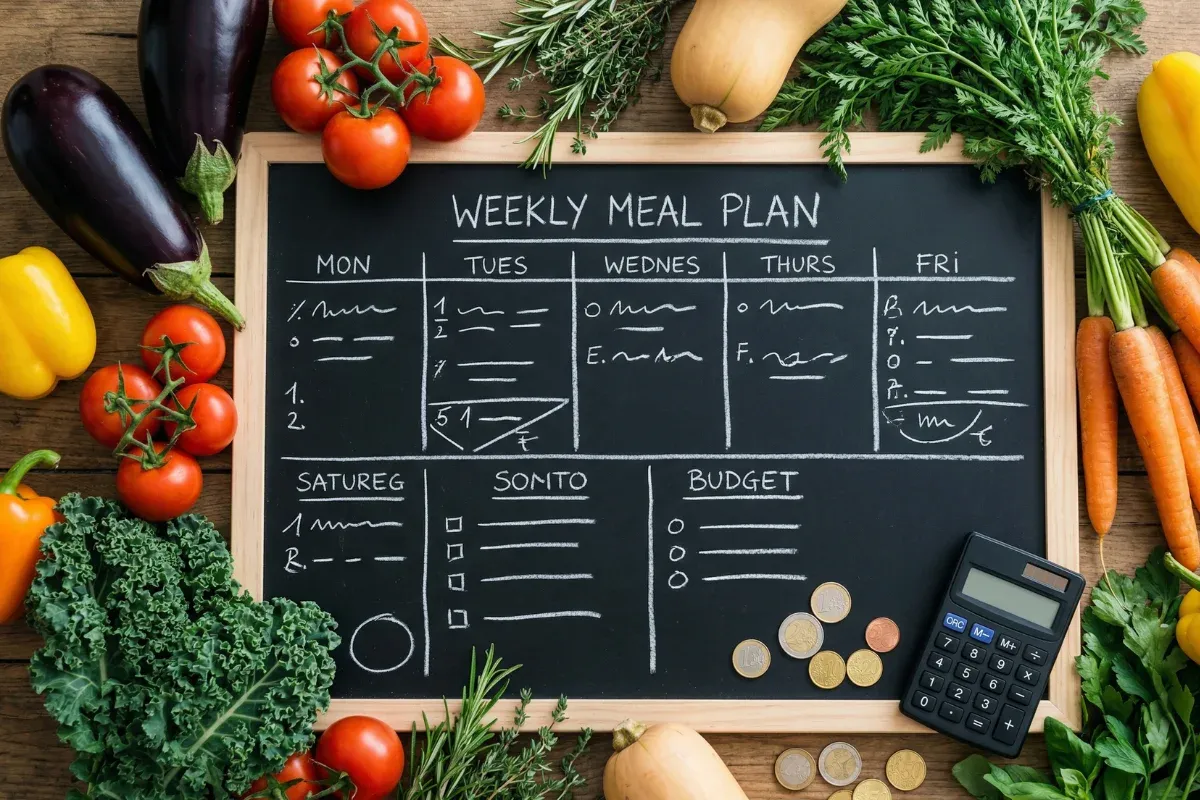
Food is the most flexible category in most budgets, which makes it both the easiest place to overspend and the biggest opportunity to save.
The meal planning method
- Check what you already have. Before shopping, inventory your fridge, freezer, and pantry. Build meals around what needs to be used first.
- Plan 5-6 meals for the week. Leave a day or two for leftovers or pantry meals. Over-planning leads to waste.
- Write a specific shopping list. Only buy what the plan requires. Stick to the list.
- Batch cook when possible. Cooking larger portions and eating leftovers saves both money and time.
- Shop seasonally. Seasonal produce is cheaper and better quality. In Greece, summer tomatoes cost a fraction of winter imports.
Real savings potential
A family of two spending 400 euros per month on groceries and takeaway can often reduce that to 250-300 euros with consistent meal planning — a saving of 100-150 euros monthly. Over a year, that is 1,200-1,800 euros redirected toward savings, debt repayment, or other needs.
Common meal planning mistakes
- Planning elaborate meals you will not have energy to cook after work
- Buying in bulk without checking if you will actually use it before it expires
- Ignoring what is already in your kitchen
- Not accounting for the meals you eat outside the home
Strategy 4: Negotiate Your Recurring Bills
Many people treat monthly bills as fixed costs. They are not. Almost every recurring expense has room for negotiation or reduction.
What you can negotiate
- Mobile phone plans. Call your provider and ask about retention offers. Mention a competitor’s lower price. In the Greek market, providers regularly offer 20-30% discounts to prevent customers from switching.
- Internet service. Same approach — loyalty discounts exist but are rarely offered without asking.
- Insurance premiums. Get quotes from competitors annually. Even if you do not switch, the quote gives you leverage.
- Bank fees. Ask about fee waivers or switch to a no-fee account.
- Subscription services. Check if annual plans are cheaper than monthly. Cancel anything you have not used in the past 30 days.
The negotiation script
Keep it simple: “I have been a customer for [X time]. I have seen a better offer from [competitor]. Is there anything you can do to keep me as a customer?”
Most people save 50-150 euros per month just by making these calls once a year. That is one afternoon of phone calls for a year of savings.
For more on how subscriptions quietly drain your budget, see our article on subscription creep and hidden charges.
Strategy 5: Build a Micro Emergency Fund
The biggest financial threat on a low income is not overspending — it is the unexpected expense. A broken appliance, a medical bill, a car repair. Without a buffer, these emergencies force you into debt, which makes the next month even harder.
Start absurdly small
Forget the advice about saving three to six months of expenses. That goal is paralyzing when you are living paycheck to paycheck. Instead, start here:
- Week 1-4: Save 5 euros per week (20 euros per month)
- Month 2-3: Increase to 10 euros per week if possible
- First goal: 100 euros (enough to handle a minor emergency)
- Second goal: 500 euros (covers most common unexpected costs)
- Long-term goal: One month of essential expenses
Where to keep your emergency fund
Put it somewhere accessible but slightly inconvenient. A separate savings account that takes a day to transfer from is ideal. If it is too easy to access, you will dip into it for non-emergencies. If it is too hard, you will not use it when you genuinely need it.
The psychological shift
Having even 100 euros set aside changes how you experience financial stress. Problems that used to feel like crises become manageable inconveniences. That mental shift is worth more than the money itself.
Strategy 6: Use No-Spend Days and Weeks
A no-spend day is exactly what it sounds like: a day where you spend zero discretionary money. You still pay for essentials that are already committed (rent, utilities), but you make no new purchases.
How to implement no-spend days
- Start with one day per week. Pick a day where you are least tempted to spend — often a day when you are home.
- Prepare in advance. Make sure you have food, entertainment, and everything you need so the no-spend day does not feel punishing.
- Track your streak. Mark it on a calendar. Visual progress is motivating.
- Graduate to no-spend weeks. Once single days feel manageable, try a full week where you only spend on absolute essentials.
What a no-spend challenge reveals
Most people who try this discover they spend money out of habit, boredom, or social pressure — not genuine need. The no-spend day forces you to pause and ask: “Do I actually need this, or am I just buying it because it is easy?”
Realistic expectations
No-spend days are not about deprivation. They are a reset. After a no-spend week, many people find they naturally spend less in the following weeks because they have broken automatic purchasing patterns.
Average savings from four no-spend days per month: 80-200 euros, depending on your baseline habits.
Strategy 7: Automate What You Can
Automation is not just for people with large incomes. Even on a tight budget, automating certain financial actions removes the temptation to skip them and ensures your priorities get funded first.
What to automate on a low income
- Savings transfer. Set up an automatic transfer of even 5-20 euros on payday, before you have a chance to spend it.
- Bill payments. Automate fixed bills to avoid late fees. A single late fee on a credit card or utility bill can cost more than a week of careful budgeting saved.
- Debt payments. If you are paying down debt, automate the minimum payment. Then add extra manually when you can.
What not to automate
- Variable expenses like groceries (you need flexibility here)
- Subscriptions you are not actively using (automate cancellation reminders instead)
- Savings amounts that would overdraft your account — always leave a buffer
The “pay yourself first” principle adapted
On a low income, “pay yourself first” means: on payday, before anything discretionary happens, your savings transfer and bill payments go out automatically. What remains is what you have to work with. This removes the daily decision fatigue of “should I save today or not?”
Putting It All Together: Your Low-Income Budget Action Plan
You do not need to implement all seven strategies at once. That is a recipe for burnout. Instead, layer them in:
Week 1: Start tracking every expense (Strategy 1)
Week 2-3: Review your tracking data and adjust your budget categories (Strategy 2)
Week 4: Set up one automated savings transfer, even if it is 5 euros (Strategy 7)
Month 2: Start meal planning for at least half the week (Strategy 3)
Month 2-3: Spend one afternoon negotiating your recurring bills (Strategy 4)
Month 3: Try your first no-spend day (Strategy 6)
Ongoing: Build your micro emergency fund week by week (Strategy 5)
Within three months, you will have a system that works with your income, not against it.
A Note on Rising Costs and Self-Compassion
If you are reading this in 2026, you are managing your finances in one of the most challenging cost environments in a generation. Tariffs have increased the price of imported goods. Energy costs remain unpredictable. Food prices have not returned to pre-2022 levels.
If your budget does not balance perfectly every month, that is not a personal failure. It is an economic reality. The goal is not perfection — it is progress. Every euro you redirect intentionally is a step toward more control and less stress.
Tefteri is a personal finance app for iPhone that helps you track expenses, income, and subscriptions — organized by category, stored locally on your device, and designed to make financial clarity effortless.
Frequently Asked Questions
How do I budget when my income is irregular?
Budget based on your lowest typical month, not your average. In good months, direct the surplus toward your emergency fund first, then savings goals. This prevents the feast-or-famine cycle where good months subsidize overspending and bad months create debt. Track your income over several months to establish your realistic baseline.
Is the 50/30/20 rule realistic on a low income?
Not in its standard form. When essentials consume 70-80% of income, the percentages need to shift. A 75/15/10 or even 80/15/5 split is more realistic and still valuable. The principle — categorizing your spending intentionally — matters more than hitting exact numbers. Any amount directed toward savings is meaningful.
What is the best free way to track expenses?
A simple notebook works. So does a basic spreadsheet. The best method is whichever one you will actually use consistently. If you prefer digital tools, look for apps that work offline and let you categorize quickly — speed and simplicity are what keep the habit alive when motivation fades.
How do I save money when I have nothing left after bills?
Start by auditing your bills using Strategy 4. Most people find 30-100 euros of savings through negotiation and cancellation alone. Then look at food spending (Strategy 3) — meal planning typically saves 100+ euros monthly. You may have more flexibility than you think, but you need the data from tracking to find it.
Should I pay off debt or save first?
Both, simultaneously. Set up a micro emergency fund (even 50-100 euros) while making minimum debt payments. Without any savings buffer, every unexpected expense goes on credit, creating a debt cycle. Once you have a small emergency cushion, aggressively tackle the highest-interest debt while maintaining minimum payments on everything else.