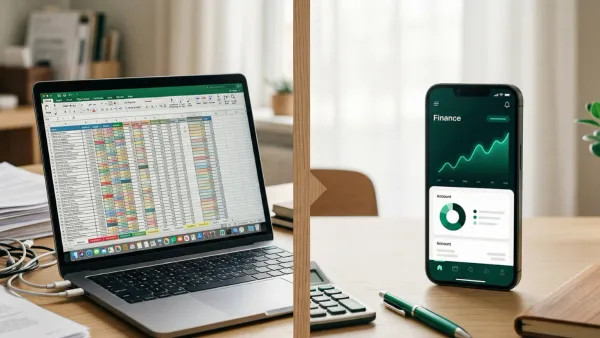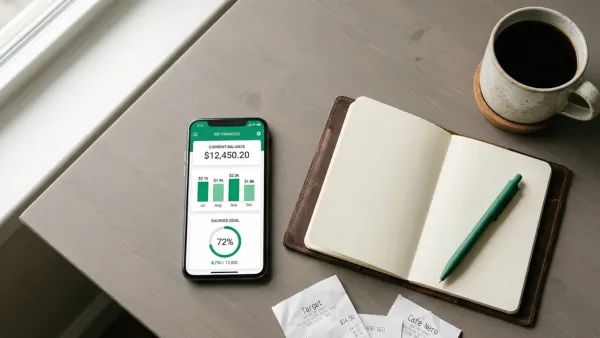
Manual expense tracking consistently outperforms automated alternatives when it comes to reducing spending. Research from the National Bureau of Economic Research shows that people who manually record their transactions spend 15-20% less than those who rely on automated bank-linked tools. The reason is straightforward: the physical act of logging each purchase creates a moment of financial awareness that passive syncing simply cannot replicate.
What Does Research Say About Manual Expense Tracking?
The connection between hands-on tracking and better financial outcomes is not anecdotal. It is grounded in behavioral economics and supported by multiple studies spanning over a decade.
The NBER Pain of Paying Study
A landmark study published through the National Bureau of Economic Research explored what researchers call the “pain of paying.” When people physically engage with a transaction, whether by handing over cash, writing a check, or manually entering an expense, the brain registers a mild discomfort signal. This signal acts as a natural brake on spending.
Participants who tracked expenses manually spent between 15% and 20% less than control groups who relied on automated tracking or no tracking at all. The key variable was not the method of payment but the degree of cognitive engagement with each transaction.
The MIT Cash vs. Card Experiments
Researchers at MIT conducted experiments showing that people were willing to pay up to 100% more when using credit cards compared to cash. The abstraction layer that cards introduce, the gap between spending and feeling the impact, reduces the brain’s spending resistance.
Automated expense trackers replicate this same abstraction. By pulling transactions into a feed without user effort, they eliminate the cognitive moment where you might pause and reconsider.
Journal of Consumer Research Findings
A 2019 study in the Journal of Consumer Research found that “transaction coupling,” the mental link between spending and the awareness of spending, is the strongest predictor of financial self-control. Manual logging strengthens this coupling. Automation weakens it.
The Psychology of Financial Awareness
Understanding why manual tracking works requires a brief detour through the psychology of attention and habit formation.
Active vs. Passive Processing
When an app automatically categorizes a $47 restaurant charge, your brain processes it passively, if at all. You might glance at it in a weekly summary, or you might never look at it again.
When you open a tracker and type “$47 - dinner at Maple Street Bistro,” something different happens. You recall the experience. You evaluate whether it was worth the cost. You place it in the context of your broader spending patterns. This is active processing, and it is the foundation of behavioral change.
The Zeigarnik Effect
Psychologists have long studied the Zeigarnik effect, the phenomenon where uncompleted tasks occupy more mental space than completed ones. Manual tracking leverages this: knowing you need to log your expenses keeps financial awareness simmering in the background throughout your day.
This low-level awareness is precisely what leads to better spending decisions. You are more likely to skip a frivolous purchase when you know you will have to confront it later by entering it into your tracker.
Habit Stacking and Financial Routines
James Clear’s research on habit formation shows that behaviors become automatic when they are attached to existing routines. A nightly five-minute expense review, paired with an existing evening habit, quickly becomes second nature. Within weeks, the act of logging feels less like a chore and more like a natural part of your day.
Privacy: The Elephant in the Room
Beyond psychology, there is a practical reason many people are reconsidering automated expense trackers: privacy.
Finance Is the Most Breached Industry
According to IBM’s annual Cost of a Data Breach report, the financial services sector has consistently ranked as the most targeted industry for data breaches. The average cost of a breach in financial services exceeds $5.9 million, and the frequency of attacks has increased year over year.
When you connect a budgeting app to your bank accounts, you create an additional attack surface. Your transaction history, account balances, and banking credentials are now stored on servers you do not control.
The Plaid Problem
Many automated finance apps rely on third-party data aggregators like Plaid to access bank data. In 2022, Plaid settled a $58 million class-action lawsuit for collecting more financial data than users consented to. Users had no idea their transaction histories were being stored and shared with multiple parties beyond the app they signed up for.
The Privacy-First Movement
A growing segment of users is choosing tools that do not require bank connections. This is not paranoia; it is risk management. A manual expense tracker that stores data locally on your device has a fundamentally different security profile than one that transmits your financial history to cloud servers.
Apps like Tefteri represent this privacy-first approach, keeping all financial data on your device without requiring bank account connections. Your spending data never leaves your phone.
Data Minimization Principle
Security experts advocate for data minimization: collect only what you need, store only what you must. A manual tracker inherently follows this principle. You decide what to record, how much detail to include, and where the data lives. No third-party aggregator sits between you and your financial information.
Manual vs. Automated: A Direct Comparison
Here is how the two approaches stack up across the dimensions that matter most:
| Feature | Manual Tracking | Automated Tracking |
|---|---|---|
| Spending reduction | 15-20% less (NBER data) | Minimal behavioral change |
| Financial awareness | High (active engagement) | Low (passive consumption) |
| Privacy | Data stays on device | Data shared with aggregators |
| Setup time | Immediate, no linking required | Bank connection, verification |
| Ongoing effort | 3-5 minutes daily | Near zero |
| Accuracy | Depends on user discipline | High for digital transactions |
| Cash tracking | Excellent | Cannot track cash |
| Categorization | Full user control | Automated, often inaccurate |
| Cost | Usually free or low cost | Often subscription-based |
| Data portability | Easy to export and own | Locked in proprietary formats |
| Bank dependency | None | Requires bank API support |
| Breach risk | Minimal (local storage) | Elevated (cloud + aggregators) |
The trade-off is clear: automated tracking saves you a few minutes a day but costs you the behavioral benefits that actually reduce spending, plus it introduces privacy risks that manual alternatives avoid entirely.
When Does Automated Tracking Make Sense?
Manual tracking is not universally superior. There are legitimate scenarios where automation earns its place.
High Transaction Volume
If you are managing finances for a business or processing dozens of transactions daily, manual entry becomes impractical. Automation handles volume better.
Reconciliation and Audit
For users who need exact reconciliation between bank statements and personal records, automated syncing reduces the risk of missed transactions.
Passive Financial Monitoring
If your goal is simply to see where money went rather than to change behavior, automated dashboards provide a convenient overview without requiring effort.
Shared Financial Management
When multiple people contribute to household finances, automated tracking can provide a unified view without requiring everyone to log manually.
When Does Manual Tracking Win?
Manual tracking is the better choice in several common and important scenarios.
Building New Financial Habits
If you are trying to reduce spending, pay off debt, or build savings, the behavioral benefits of manual tracking are hard to overstate. The 15-20% spending reduction alone can translate to thousands of dollars annually.
Privacy-Sensitive Users
If you prefer not to share your financial data with third parties, or if you live in a region with limited data protection laws, manual tracking keeps your information under your control.
Cash-Heavy Lifestyles
Automated trackers cannot capture cash transactions. If cash represents a meaningful portion of your spending, whether for budgeting, tipping, or market purchases, you need manual entry regardless.
Simplifying Your Financial Stack
A manual tracker requires no bank API support, no account verification, no troubleshooting broken connections. It works immediately and continues working regardless of bank policy changes. If you want to track your expenses effectively in 2026, simplicity matters more than feature count.
The Hybrid Approach
Many people find that the best system combines both methods. Use automated tracking for monitoring and reconciliation, but maintain a manual daily practice for the transactions you want to be most mindful about.
For example, you might automate recurring bills and subscriptions while manually logging discretionary spending like dining out, entertainment, and impulse purchases. This gives you the behavioral benefits of manual tracking where they matter most, without the burden of logging every utility payment.
The key insight is that the value of manual tracking comes from the act of tracking, not from creating a perfect record. Even if you miss a few transactions, the habit of regularly engaging with your spending has the desired effect on behavior.
Building a Sustainable Manual Tracking Practice
If you decide to try manual tracking, these strategies will help you stick with it.
Start Small
Do not try to track everything from day one. Begin with one category, such as food or entertainment. Add categories as the habit solidifies.
Set a Daily Time
Choose a consistent time for logging, whether morning, lunch, or before bed. Pair it with an existing habit to make it stick.
Keep It Simple
You do not need 47 subcategories. Three to five broad categories are enough to start. You can refine later. Many people find that moving from spreadsheets to a dedicated app makes this process smoother.
Review Weekly
A brief weekly review transforms raw data into insight. Look for patterns: which days do you spend the most? Which categories surprise you? This is where the real behavior change happens.
Forgive Gaps
Missed a day? Log what you remember and move on. The goal is not perfection. The goal is awareness.
The Growing Privacy-First Finance Movement
The shift toward privacy-first financial tools is accelerating. Users are increasingly asking a reasonable question: why should a budgeting app need access to my bank accounts?
This question has driven the development of a new category of finance tools that prioritize local data storage, no bank connections, and user control. Tefteri is one example of this approach, built around the principle that your financial data should stay on your device.
The movement extends beyond individual apps. Regulatory frameworks like GDPR in Europe and state-level privacy laws in the United States are giving users more power over how their financial data is collected and used. The trend is clear: privacy is becoming a feature, not a compromise.
For a deeper look at how different budgeting methods compare, including their privacy implications, it is worth evaluating each approach against your own priorities.
Tefteri is a personal finance app for iPhone that helps you track expenses, income, and subscriptions — organized by category, stored locally on your device, and designed to make financial clarity effortless.
Frequently Asked Questions
Is manual expense tracking actually more effective than automated tracking?
Yes, according to research from the National Bureau of Economic Research. Manual trackers spend 15-20% less than their automated counterparts. The mechanism is “transaction coupling,” the mental link between spending money and consciously recording it. This link strengthens financial self-control in ways that passive automation cannot replicate.
How much time does manual expense tracking take each day?
Most people spend 3-5 minutes per day on manual expense tracking. The most effective approach is a quick entry at the point of purchase or a single end-of-day session where you log everything at once. Weekly reviews add another 10-15 minutes but provide the most valuable insights.
Are automated expense trackers safe to use with bank connections?
Automated trackers introduce additional security risk by storing your financial data on external servers and relying on third-party aggregators. While many services use encryption and follow security standards, the financial services industry remains the most breached sector according to IBM’s data. The question is not whether they are safe in absolute terms, but whether the convenience is worth the additional exposure compared to local-only alternatives.
Can I combine manual and automated tracking?
Absolutely. A hybrid approach is popular and practical. Use automated tools for fixed recurring expenses like rent and utilities, while manually tracking discretionary spending like dining, entertainment, and shopping. This gives you the behavioral benefits of manual tracking for the categories where mindfulness matters most.
What is the best way to start manual expense tracking?
Start with a single spending category, such as food or transportation, and track it for two weeks. Use whatever tool feels natural, whether that is a dedicated app, a notes app, or a paper notebook. Once the habit is established, expand to other categories. The critical factor is consistency, not comprehensiveness.