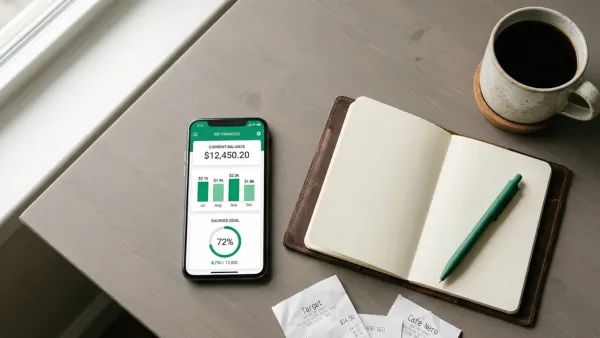
Organizing your finances for tax season does not start in March — it starts in October, the moment the previous tax cycle closes. By tracking income, expenses, and deductions throughout the year on a simple monthly schedule, you eliminate the last-minute scramble, reduce errors, and often uncover deductions you would otherwise miss. This checklist gives you a concrete plan for every month from October through filing day.
The difference between people who dread tax season and people who breeze through it is not accounting expertise. It is preparation spread across twelve months instead of compressed into two panicked weeks.
Why Year-Round Organization Beats the Last-Minute Rush
Tax preparation is not inherently complicated. What makes it stressful is volume: gathering twelve months of financial data in a few days, while a deadline looms. Every missing receipt, every unclear transaction, every forgotten income source becomes a source of anxiety.
When you organize throughout the year, each month requires only 15-20 minutes of maintenance. Compare that to the 8-15 hours most people spend scrambling in the weeks before filing.
The real cost of disorganization
- Missed deductions. If you cannot find the receipt, you cannot claim the deduction. The average taxpayer misses 200-500 euros in legitimate deductions simply because of poor record-keeping.
- Errors and penalties. Rushed filings contain more mistakes, which can trigger audits or penalties.
- Accountant fees. If you use a professional, disorganized records mean more billable hours sorting through your paperwork.
- Stress and decision fatigue. Financial anxiety peaks during tax season for a reason — it is the moment when a year of avoidance catches up.
The Month-by-Month Tax Preparation Checklist
This timeline follows the Greek tax calendar, where the tax year aligns with the calendar year and filing typically happens between March and June. If you are in a different jurisdiction, adjust the specific dates but follow the same monthly rhythm.
October: Set Up Your System
The fiscal year is winding down. This is the month to establish (or refresh) your tracking system for the coming year.
Action items:
- Choose your tracking method — spreadsheet, app, or paper folder system
- Create categories that match your tax form: employment income, rental income, interest income, medical expenses, charitable donations, professional expenses
- Set up a physical or digital folder for receipts and documents
- Review last year’s tax return to identify categories you need to track
- Schedule a monthly 15-minute “finance check-in” on your calendar
Key principle: Your tracking categories should mirror your tax form categories. If your country’s tax form has a line for medical expenses, your tracking system needs a medical expenses category. This eliminates translation work at filing time.
November: Gather Year-End Documents
As the calendar year approaches its end, certain documents start arriving.
Action items:
- Collect any outstanding invoices if you are self-employed
- Review bank and investment account statements for accuracy
- Confirm employer details for your annual income statement
- Check that rental income records are complete (if applicable)
- Make any planned charitable donations before December 31 (for this year’s deduction)
December: Close Out the Year
The final month of the tax year. This is your last chance to take actions that affect this year’s taxes.
Action items:
- Make final contributions to any tax-advantaged accounts
- Complete any last-minute deductible expenses (medical appointments, professional development)
- Pay any outstanding deductible bills before year-end
- Back up all digital financial records
- Verify that all income sources for the year have been recorded
- For property owners: confirm ENFIA (property tax) payments are documented
January: Collect and Organize
The new year begins. Income statements and tax documents start arriving.
Action items:
- Collect your annual employer income statement (vevaiosi apodochon)
- Gather bank interest statements
- Collect rental income documentation
- Organize medical expense receipts
- Compile records of charitable donations
- Gather documentation for any property transactions
- Pull together records of professional expenses if self-employed
- Download annual statements from your bank accounts
February: Review and Reconcile
With most documents in hand, February is the month to cross-check everything.
Action items:
- Compare your tracked expenses against bank statements — look for discrepancies
- Verify that all income sources are accounted for (employment, freelance, rental, interest, dividends)
- Check for any overlooked deductions (see the commonly missed deductions section below)
- If using an accountant, schedule your appointment now before the rush
- Organize all documents in the order your tax form requires them
- Calculate preliminary tax estimates to avoid surprises
March: Prepare and File
In Greece, the tax filing platform (TAXISnet) typically opens between March and April. Preparation should be complete before the portal opens.
Action items:
- Complete a draft of your tax return using your organized records
- Review the pre-filled information on TAXISnet for accuracy
- Cross-reference pre-filled data with your own records — do not assume the pre-filled data is correct
- Submit your filing or deliver organized records to your accountant
- Save a copy of your filed return and all supporting documents
- Note the filing deadline and any payment due dates
April-June: File, Pay, and Archive
The filing window is typically open through June, with specific deadlines that vary each year.
Action items:
- If you have not filed yet, complete your submission
- Set up payment plans if needed for any tax owed
- Archive this year’s complete tax file (digital and/or physical)
- Note any carryforward amounts for next year (losses, credits)
- Begin tracking for the current tax year using the system you set up in October
What Documents to Gather: The Complete List
Having a clear document checklist prevents the most common source of tax-season stress — the frantic search for missing paperwork.
Income documents
| Document | Source | When It Arrives |
|---|---|---|
| Employment income statement | Employer | January-February |
| Freelance/self-employment income records | Your invoices | Ongoing |
| Rental income records | Lease agreements, bank deposits | Ongoing |
| Bank interest statements | Banks | January |
| Dividend statements | Brokerage/companies | January-February |
| Pension income statement | Pension fund | January |
Expense and deduction documents
| Document | Purpose | Notes |
|---|---|---|
| Medical receipts | Medical expense deduction | Keep all receipts over 5 euros |
| Charitable donation receipts | Donation deduction | Must be to registered organizations |
| Professional development receipts | Professional expense deduction | Courses, books, certifications |
| Mortgage interest statement | Housing deduction | From your bank |
| Rent receipts (if applicable) | Rent deduction | Lease agreement plus payment proof |
| ENFIA payment confirmation | Property tax documentation | From TAXISnet |
| Insurance premium receipts | Insurance deduction | Life, health, pension insurance |
Property-related documents
- Property purchase or sale contracts
- ENFIA assessment and payment receipts
- Rental agreements (if you are a landlord)
- Property improvement receipts (for capital gains calculations)
How Year-Round Expense Tracking Makes Tax Season Painless
The single most impactful habit for tax preparation is consistent expense tracking. When you record and categorize expenses throughout the year, tax season becomes an exercise in exporting data — not reconstructing it from memory and shoe boxes.
What good tracking looks like
- Every expense is recorded within a day or two of occurring
- Expenses are categorized by tax-relevant categories, not just “food” or “transport”
- Receipts for deductible expenses are photographed or filed immediately
- Monthly totals are reconciled against bank statements
The tracking-to-tax pipeline
- During the year: Log expenses in categories that match your tax form
- At year-end: Export or total each category
- At tax time: Transfer category totals directly to the appropriate lines on your return
This is where a dedicated finance tool earns its value. Apps like Tefteri are designed around category-based tracking with export capabilities, so the year-end summary is already organized the way your tax form expects it. No reformatting, no recategorizing, no guesswork.
For more on building a sustainable tracking habit, see our complete guide on how to track expenses in 2026.
Deductions People Commonly Miss
Tax codes are complex, and many legitimate deductions go unclaimed simply because people do not know they exist or cannot find the documentation.
Frequently overlooked deductions in Greece
- Medical expenses beyond the obvious. Dental work, physiotherapy, mental health services, prescription medications, and even some medical devices qualify. Keep every receipt.
- Charitable donations. Donations to registered charitable organizations are deductible, but you need the official receipt. Cash dropped in a collection box does not count.
- Professional development. If you pay for courses, certifications, or professional materials related to your work, these may be deductible.
- Rent payments. If you rent your primary residence, a portion of your rent may qualify for a deduction. Keep your lease agreement and payment receipts.
- Insurance premiums. Certain life and health insurance premiums are deductible up to specific limits.
- E-payments minimum. Greece requires a minimum percentage of income to be spent via electronic payments to qualify for certain deductions. Track your electronic vs. cash spending ratios throughout the year.
The e-payments requirement
In Greece, taxpayers must spend a minimum percentage of their declared income through electronic means (cards, bank transfers) to receive the full personal tax deduction. Falling short of this threshold results in a penalty. Track your electronic spending throughout the year, not just at tax time.
Digital vs. Paper Organization: Which Works Better?
Both approaches work. The best system is the one you will actually maintain. Here is an honest comparison.
Paper organization
Strengths:
- No learning curve
- No technology failures
- Tactile satisfaction of a organized folder system
- Works for people who distrust digital tools
Weaknesses:
- Receipts fade over time (thermal paper is especially vulnerable)
- Physical storage required
- No automatic calculations or summaries
- Difficult to search or sort
- Vulnerable to physical damage (water, fire, loss)
Digital organization
Strengths:
- Searchable and sortable
- Automatic calculations and category totals
- Cloud backup protects against physical loss
- Easy to share with accountants
- Mobile access means you can record expenses anywhere
- Export to spreadsheet or PDF for tax filing
Weaknesses:
- Requires initial setup
- Depends on consistent data entry
- Some people find apps less intuitive than paper
The hybrid approach
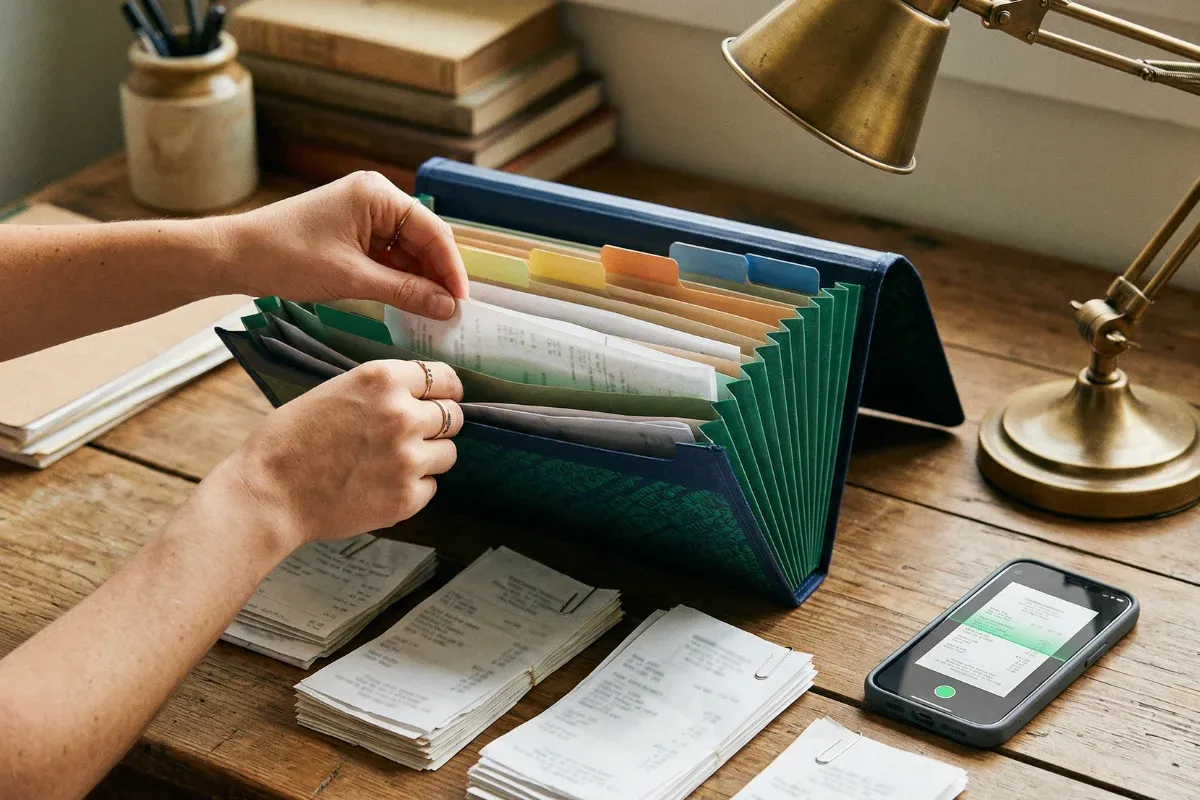
Many people find the best solution is hybrid: digital tracking for day-to-day expenses (app or spreadsheet), with a physical folder for important paper documents that arrive by mail (official statements, property documents, insurance policies). Photograph paper receipts immediately and file the digital copies in your tracking system.
Greek Tax Specifics: Key Dates and Requirements
Important annual deadlines
- ENFIA (property tax): Assessment typically issued in September. Payment in installments through January.
- Income tax filing: Platform opens March-April. Deadline typically June 30, though extensions are common.
- Advance tax payment (prokatavoli forou): Calculated on your return, due in installments.
- VAT returns (if self-employed): Quarterly or monthly depending on revenue.
The pre-filled return
Greece’s TAXISnet system pre-fills much of your tax return using data from employers, banks, and other sources. However, pre-filled data is not always complete or accurate. Always cross-reference with your own records. Common discrepancies include:
- Missing freelance income
- Incorrect employer-reported figures
- Missing bank interest from smaller accounts
- Incomplete medical expense records
Your own organized records are the definitive source. The pre-filled form is a starting point, not a finished product.
Building Your Personal Tax Preparation Calendar
For a broader framework for organizing your finances month by month — not just for taxes, but for all financial planning — see our personal finance monthly calendar.
The tax-specific checklist in this article slots into that larger calendar. The overlap is intentional: good financial organization serves multiple purposes simultaneously. The same tracking habit that makes tax season painless also improves your budgeting, helps you spot subscription creep, and gives you a clear picture of your financial health year-round.
Tefteri is a personal finance app for iPhone that helps you track expenses, income, and subscriptions — organized by category, stored locally on your device, and designed to make financial clarity effortless.
Frequently Asked Questions
How far back should I keep tax documents?
In Greece, the statute of limitations for tax audits is generally five years from the end of the year in which the return was filed. Keep all tax returns and supporting documents for at least six years to be safe. For property-related documents, keep them indefinitely — you may need purchase records decades later for capital gains calculations.
What if I discover I missed a deduction after filing?
You can file an amended return (tropologiki dilosi) to claim deductions you missed. There are time limits, so act promptly. If the missed deduction is significant, consult with a tax professional about the amendment process and any potential implications.
Is it worth hiring an accountant, or can I file myself?
For straightforward returns (single employer, no rental income, no self-employment), self-filing through TAXISnet is feasible and free. If you have multiple income sources, rental properties, self-employment income, or complex deductions, a qualified accountant typically saves more in found deductions and avoided errors than they charge in fees. The key is arriving organized — bring them sorted records, not a bag of receipts.
How do I track expenses for tax purposes if I share finances with a partner?
Each taxpayer files individually in Greece, even if married. However, shared expenses (rent, utilities, medical) need to be allocated correctly. The simplest approach is to agree on a split and track each person’s share in their own records. If you use a shared tracking system, make sure it can tag or filter by person so each partner can export their own tax-relevant totals.
What is the minimum I need to do each month to stay organized?
Fifteen minutes per month is enough if you have a system. Spend it categorizing any expenses from the past month, filing any receipts or documents that arrived, and verifying that your tracked totals roughly match your bank statement. This monthly habit eliminates 90% of tax-season stress. Set a recurring calendar reminder and treat it like any other monthly obligation.