Buy Now Pay Later services like Affirm, Klarna, and Afterpay are now reporting missed payments to the major credit bureaus — and 47% of BNPL users paid late in the past year, according to LendingTree’s 2026 report. What feels like a free, flexible way to buy a $200 jacket at Target in four easy installments is increasingly a source of hidden debt, surprise fees, and real credit score damage that most shoppers don’t see coming until it’s too late.
What “Pay in 4” Really Means for Your Monthly Cash Flow
The pitch is simple: split any purchase into four equal, interest-free payments every two weeks. No hard credit check. No annual fee. One tap at checkout on Amazon, Walmart, or DoorDash. It feels like getting the thing now while the financial consequence shows up later — because that is exactly what it is.
The problem isn’t one purchase. It’s five running at once.
BNPL users carry an average of $453 more in personal loans and $871 more in credit card debt than non-users, according to recent research. A Motley Fool study found that nearly one in three BNPL users has lost track of their loan payments — not because they’re irresponsible, but because juggling four separate two-week payment schedules across three different providers is genuinely difficult to track mentally.
A typical overextended BNPL user in 2026 might have:
- $120 outstanding through Affirm (Amazon purchase, payment 3 of 4)
- $89 through Afterpay (Target clothing, payment 2 of 4)
- $65 through Klarna (Wayfair item, payment 1 of 4)
- $44 through Apple Pay Monthly (older tech purchase)
That’s $318 in upcoming payments across four platforms, none of which show up on a bank statement as a single recognizable line item. Each feels small. Together they’re a significant monthly obligation most budgets don’t account for.
The Credit Score Problem Nobody Saw Coming
Until recently, BNPL lived in a credit reporting gray zone. Most providers didn’t report to Equifax, Experian, or TransUnion — which made it easy to use freely without worrying about your FICO score.
That changed. In April 2025, Affirm began reporting all pay-over-time products to Experian. FICO launched “FICO Score 10 BNPL,” the first major credit scoring model to formally incorporate BNPL payment data. Klarna and Afterpay have been more cautious about full reporting, citing concerns that traditional scoring models may penalize frequent short-term BNPL usage — but that caution is not a guarantee, and regulatory pressure is pushing all providers toward greater transparency.
What this means in practice: a missed Affirm payment is now potentially a missed payment on your credit report. Given that 47% of BNPL users paid late at least once in the past year — up from 34% two years ago — this is a real and growing risk for a significant portion of the BNPL user base.
The credit score impact for individual incidents was modest in FICO’s initial study (within 10 points up or down for 85% of users). But multiple missed payments, a growing trend among younger users, can compound. And a hard credit inquiry from a longer-term BNPL plan (Affirm’s 6- or 12-month options) has always shown up on credit reports.
The Grocery Store Signal: When BNPL Becomes a Warning Sign
The most telling shift in BNPL usage patterns in 2026: 25% of BNPL users are now using it for groceries — nearly double the 14% rate from a year ago. More than half of active BNPL users say they would not be able to make ends meet without it.
Using Affirm to buy a $1,200 mattress is one thing. Using Afterpay to buy groceries at Whole Foods is a signal that cash flow is under pressure in a way that installment plans can temporarily mask but not solve. When groceries become a financed purchase, the underlying budget math isn’t working.
This is where subscription creep and BNPL have something in common: both are forms of spending that slip past normal budget awareness because they’re fragmented across platforms and payment dates.
| BNPL Provider | Major Retailers | Reports to Bureaus | Late Fee |
|---|---|---|---|
| Affirm | Amazon, Walmart, Target | Yes (Experian, since Apr 2025) | Varies by loan |
| Klarna | Many fashion/home retailers | Limited | Up to $7 |
| Afterpay | Target, Sephora, many DTC brands | Limited | Up to $10 |
| PayPal Pay Later | Everywhere PayPal is accepted | Partially | None (interest accrues) |
Why BNPL Feels Invisible in Your Budget
The standard expense tracking habit — logging purchases when they happen — doesn’t naturally capture BNPL installments. When you buy something for $120 through Afterpay, you might log $30 (the first payment), then forget the remaining $90 as three future debits that feel like small, unrelated charges.
This is the core tracking problem. Your bank statement shows four payments of $30 over six weeks with no clear connection to the original purchase. By the time the fourth payment hits, you’ve mentally moved on — even though the cash is still flowing out.
The only accurate way to track BNPL commitments is to log the total obligation at purchase — the full $120 as a single recurring expense entry, spread across the payment schedule — rather than treating each installment as a new, separate transaction. Tefteri makes this straightforward with recurring expense entries: create the full purchase amount as a scheduled expense and let the payment schedule reflect reality.
How to Use BNPL Without Getting Burned
BNPL isn’t inherently bad. Interest-free installments on a large, planned purchase you were going to make anyway can be a reasonable cash flow tool. The problems emerge from three specific patterns:
Stacking: Running four or more BNPL plans simultaneously makes the total obligation invisible. Keep it to one or two at a time, and write down the payment schedule.
Impulse triggers: BNPL is deliberately integrated into checkout flows at Amazon, Walmart, and thousands of DTC brands to reduce friction on purchases you might otherwise skip. The one-tap approval for a $180 pair of shoes doesn’t feel like taking on debt — but it is.
Groceries and essentials: When BNPL is covering food and utility bills, the problem is budget structure, not payment method. No installment plan solves a cash flow gap — it just moves it forward with interest and late fees attached.
The practical rule: if you could pay cash for the full amount right now and it wouldn’t disrupt your budget, BNPL is fine. If you cannot, you’re borrowing — and you should treat it accordingly, with the same seriousness as a credit card balance.

The Bigger Picture: BNPL and the 2026 Debt Cycle
BNPL is not the cause of the current US consumer debt stress — but it is a layer that makes existing stress harder to see. US credit card balances hit a record $1.28 trillion in early 2026. The 90-day+ credit card delinquency rate reached 12.4%, worse than 2008–09 levels. Against this backdrop, BNPL commitments are additional obligations that don’t always show up in the debt numbers people are tracking.
Adding $400–$600 in BNPL commitments to a household already carrying $6,000+ in credit card debt at 22% APR isn’t neutral. It means less cash available each month for minimum payments, which means higher interest charges on the existing debt, which means slower payoff. The installment plans that feel like help are sometimes making the underlying math worse.
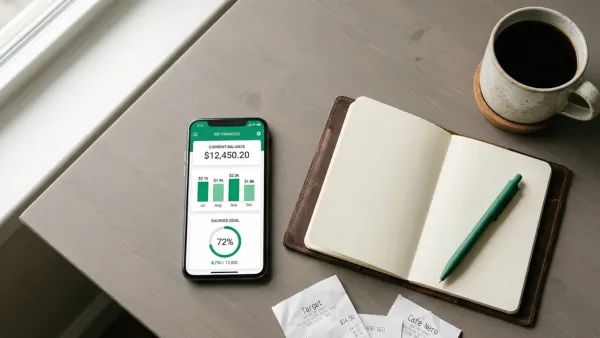
Knowing where your money actually goes — all of it, including those four-payment installments — is the starting point for any real debt plan. Tefteri gives you that picture without requiring you to link bank accounts or share financial credentials. Log purchases as they happen, build the pattern over 60 days, and the commitments that felt invisible become concrete.
Tefteri is a personal finance app for iPhone that helps you track expenses, income, and subscriptions — organized by category, stored locally on your device, and designed to make financial clarity effortless.
Frequently Asked Questions
Does using Affirm or Klarna hurt my credit score?
It depends on the plan and provider. Affirm has been reporting all pay-over-time loans to Experian since April 2025 — so missed payments will show up on your credit report. Klarna and Afterpay remain more cautious about full bureau reporting, but this is changing. For short Pay-in-4 plans, the impact is currently limited for on-time payers; for missed payments, the risk is real and growing.
Can I use BNPL responsibly?
Yes, with discipline. The safest BNPL use is for a single planned purchase you could otherwise afford in full, with only one plan running at a time. The problem is stacking multiple installment plans simultaneously — when you lose track of total monthly obligations across Affirm, Klarna, and Afterpay at once, late payments become much more likely.
Why is my credit score dropping if I haven’t missed a payment?
A hard credit inquiry (common for longer Affirm plans of 6–12 months) shows up on your report and temporarily lowers your score. Multiple hard inquiries in a short window signal risk to scoring models. Pay-in-4 plans typically use soft checks that don’t affect scores — but confirm with each provider before applying, as policies vary.
How do I track BNPL payments in my budget?
The most accurate method is to log the full purchase amount as a recurring expense at the moment of purchase, then mark each installment as it hits your bank account. Avoid logging only the first installment — this understates your actual monthly obligation and causes the “where did my money go” problem at the end of the month. Apps that support recurring entries make this straightforward.
Is BNPL the same as a credit card?
Not exactly, but the financial reality is similar: you’re spending money you don’t have yet and committing to future payments. The key differences are that Pay-in-4 plans are typically interest-free (if paid on time), have lower late fees than credit cards, and are easier to get approved for. The risk is that because they feel less serious than credit cards, people stack more of them and track them less carefully — which is exactly how small installments become a significant budget problem.