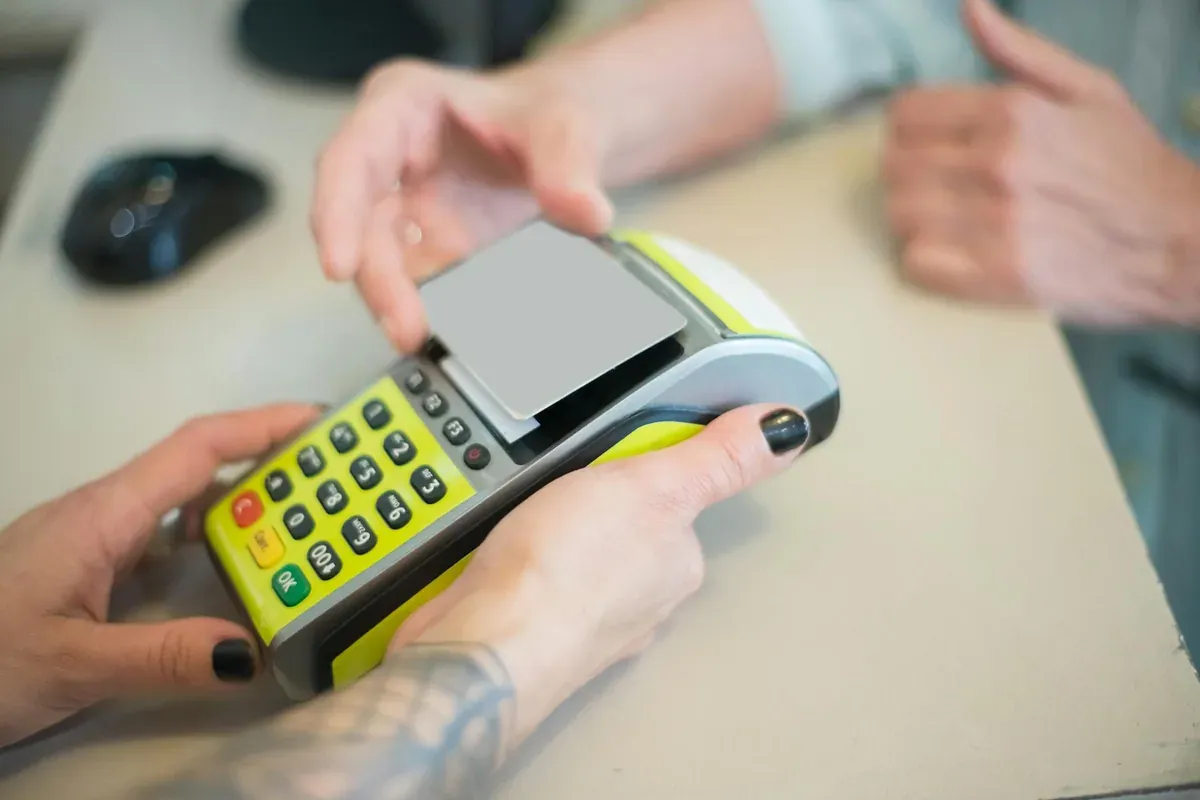
Research consistently shows that people spend 12 to 18 percent more when paying with a card than with cash. The reason is a behavioral phenomenon called the “pain of payment”: handing over physical bills creates an immediate psychological cost that makes you think twice before spending. Tap-to-pay and credit cards remove that friction almost entirely. The practical implication is not to go cash-only — it is to use each payment method deliberately, where it works in your favor.
What the Research Actually Shows
The concept of “pain of payment” was developed by behavioral economist Drazen Prelec at MIT Sloan. His research showed that the psychological discomfort of parting with cash acts as a natural speed bump before each purchase — and that removing that friction, as cards do, consistently increases spending.
In one study comparing payment methods, people planning a holiday meal were willing to spend around $175 using a credit card but only $145 using cash — a 20 percent difference for the same occasion. The variable was not their budget or their preferences. It was the payment method.
More recent fMRI research from MIT confirms a different mechanism at work: credit cards do not just reduce the pain of payment, they actively trigger the brain’s reward circuitry before a purchase is complete. Seeing a card in your hand lights up the same neural pathways as anticipating a pleasurable reward — essentially stepping on the gas of your spending impulse before you have consciously decided to buy.
The bottom line: with a card, your brain is already celebrating the purchase before your wallet feels anything.
Why Cash Creates Spending Awareness
Cash has several built-in friction points that slow spending in ways no digital payment can replicate:
- You see exactly how much you have left. When your wallet holds $60, you know it at a glance. There is no abstract balance hiding behind an app notification.
- The exchange feels irreversible. Once you hand over a $20 bill, you feel that loss. This is the pain of payment working as intended.
- Small purchases register. A $5 coffee feels different when it visibly reduces your folded bills than when it is a tap that disappears into a monthly Chase or Ally statement alongside dozens of other transactions.
For categories where spending tends to drift — a Whole Foods run, a Target trip that started with shampoo, a weekend of DoorDash — cash creates a hard ceiling that good intentions alone cannot match.
The Cash Stuffing Movement (and What the Science Says About It)
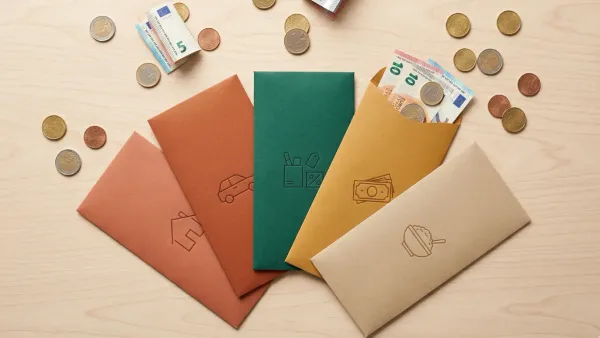
Cash stuffing is TikTok’s most enduring personal finance trend, with the hashtag accumulating billions of views since 2021. The concept: withdraw cash for each spending category at the start of the month and place it into labeled envelopes. When an envelope is empty, that category is done.
The reason it works is purely behavioral. Watching $200 leave your hands for the “dining out” envelope is a genuinely different experience from seeing a $200 charge on a statement next month alongside 40 other transactions. The physical separation makes abstract budget limits tangible and visible in a way that a number in an app cannot fully replicate.
For Gen Z and millennials facing record credit card debt — average US balances hit $6,380 in 2026, up from $5,100 in 2023 — cash stuffing offers a behavioral reset. It has real limitations (your cash earns nothing, cannot build credit history, and is impractical for online spending), but as a short-term modifier for your worst spending categories, the behavioral science supports the basic mechanism.
When Cards Clearly Win
Cards are not the problem. For certain categories, they are the better tool:
- Fixed bills and subscriptions: Autopaying rent, utilities, and insurance through your checking account means nothing slips through. The full transaction record also makes it easy to track your spending without any manual work.
- Online purchases: There is no cash option for Amazon, Instacart, or your Hulu subscription.
- Rewards and cashback: A 2 percent cashback card on your Costco run or a travel card for a Delta flight returns real value — but only when you pay the full balance monthly. At 20-plus percent APR, any rewards program becomes a net loss the moment you carry a balance.
- Fraud protection: A disputed charge with Capital One or Discover takes a phone call. Cash lost is simply gone.
- Visibility: Every card transaction creates a permanent record. If you are trying to understand spending patterns or spot subscription creep, card statements give you data that cash spending never will.
Cash vs. Card: Category-by-Category
| Category | Better Method | Why |
|---|---|---|
| Groceries (weekly shop) | Cash | Hard ceiling prevents impulse adds |
| Coffee / casual dining | Cash | Small amounts add up; cash creates friction |
| Online shopping | Card | No practical alternative |
| Fixed bills (utilities, rent) | Card / autopay | Automation plus full transaction record |
| Travel and hotels | Card | Rewards, fraud protection, deposit holds |
| Large planned purchases | Card | Buyer protections, rewards, credit building |
| Nights out / entertainment | Cash | Natural spending limit for discretionary fun |
The Hybrid Strategy That Actually Works
The best approach is not ideological — it is functional. Use each payment method where its properties work in your favor.
Cash for variable discretionary spending: Withdraw a weekly allocation for groceries, dining, and entertainment. Treat it as a hard limit, not a suggestion. When the cash is gone, that category is done.
Card for fixed and tracked expenses: Automate your bills, use cards for planned purchases, and let the transaction history do the work of building your spending record.
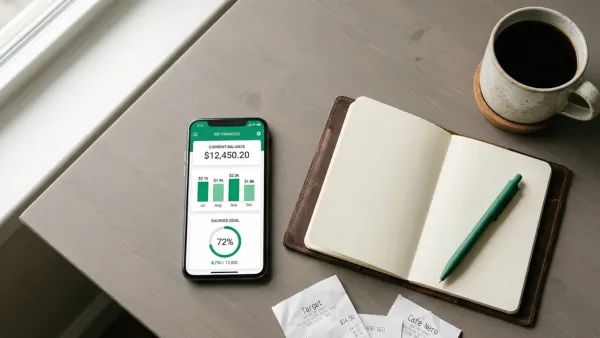
Manual tracking for everything: This is where most hybrid strategies break down. People track card spending automatically but lose visibility on cash. Tefteri lets you log both cash and card transactions in the same place without connecting to a bank — every entry is a deliberate, manual act that mirrors the awareness you get from physically handing over bills.
Pairing a conscious payment method with a structured framework from budgeting methods compared turns behavioral awareness into actual financial progress.
The Real Problem: When Every Payment Is Invisible
The deeper issue with an entirely cashless life is not the spending itself — it is the invisibility. When every transaction is a tap, a swipe, or an auto-charge, the cumulative weight of your spending is only visible once a month, in a statement that arrives after the damage is done.
The value of cash — or of manual expense tracking that mimics cash’s deliberateness — is that it puts the cost of each purchase back in front of you at the moment of decision. That is exactly when it matters most.
Tefteri is a personal finance app for iPhone that helps you track expenses, income, and subscriptions — stored locally on your device, with no bank linking required, so your financial data stays completely private.
Frequently Asked Questions
Do people really spend more with credit cards?
Yes, consistently. Studies show an average of 12 to 18 percent more with cards than cash, with some research finding differences up to 20 percent for discretionary categories like dining and entertainment. The effect is strongest for impulsive or hedonic purchases — the things you did not plan to buy — and smallest for necessities where the purchase is predetermined regardless of payment method.
Is cash stuffing an effective budgeting method?
For controlling overspending in specific categories, yes — the behavioral science supports it. The physical constraint of running out of cash is a harder limit than a budget number in an app. The downsides: your cash earns no interest, it is not practical for online purchases, and it cannot be tracked automatically. It works best as a short-term corrective tool for problem categories, not as a complete long-term system.
What about Apple Pay and tap-to-pay — psychologically, are they like cash or cards?
Even more like cards, and possibly worse. Tap-to-pay requires almost no motor effort and provides zero visual focus on money leaving your possession. Behavioral researchers observe that contactless payment further reduces the pain of payment compared to a physical card swipe — making it the highest-risk payment method for impulse spending.
Should I stop using credit card rewards to avoid overspending?
It depends on your discipline. If you pay the full balance monthly and would make the same purchase regardless of the payment method, rewards cards return genuine value — typically 1 to 2 percent on everyday spending. If you are carrying a balance, the 20-plus percent APR on most US cards means any rewards program is a net loss. Most people who optimize for rewards end up spending more than the rewards return.
How do I track cash spending if there is no digital record?
Log it manually, immediately — before the receipt hits your pocket. The act of entering a cash purchase into a tracking app creates the same deliberate pause that makes physical cash effective. This is an advantage of manual-entry apps: they treat every transaction, whether cash or card, with the same intentional act of recording, keeping your awareness consistent regardless of how you paid.