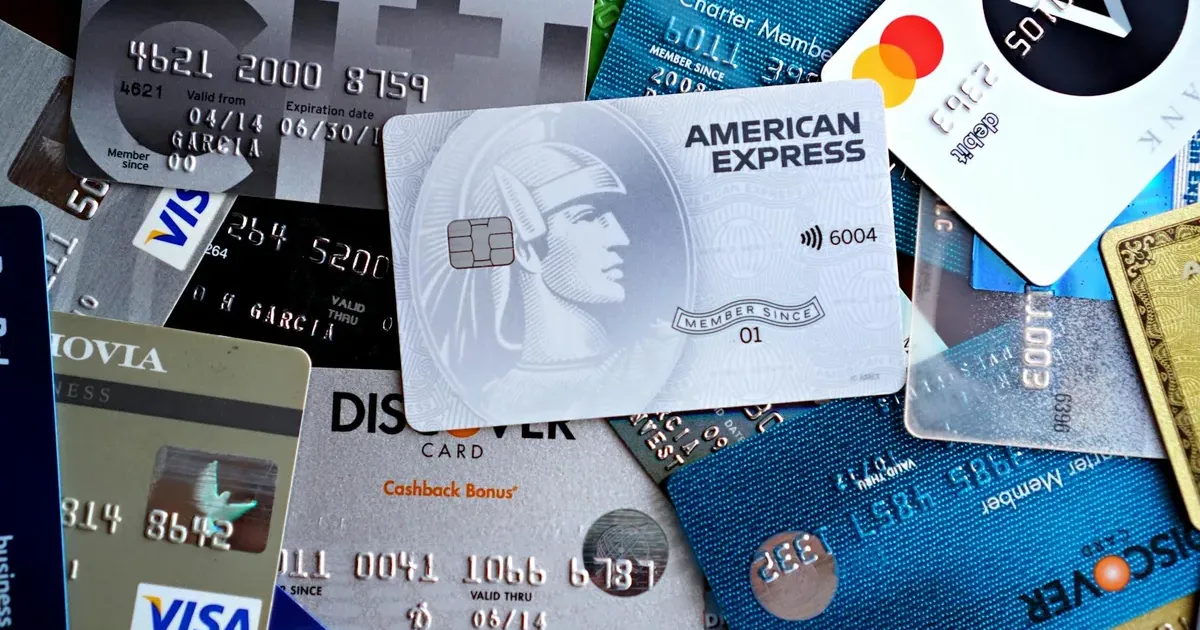
US credit card balances just hit a record $1.28 trillion. The average American carrying a balance owes $6,580 at an average APR of 22.30%. Paying only the minimum on that balance takes 17 to 22 years and costs more in interest than the original debt. The numbers are not just alarming — they follow a predictable math that most people have never been shown.
How America Got to $1.28 Trillion
The New York Federal Reserve’s Q4 2025 Household Debt report confirmed the record: US credit card balances are up 66% since Q1 2021, when pandemic-era stimulus payments temporarily drove them down. Starting in mid-2022, inflation peaked at 9.1% CPI, real wages declined, and consumers turned to revolving credit to maintain spending. The Federal Reserve’s response — the fastest rate hike cycle in four decades — pushed average credit card APRs from roughly 15% to 22%+.
The result is a two-sided squeeze: people borrowed more, at rates they had never seen before.
About 60% of credit card users carry a balance month to month, according to Federal Reserve data. The 90-day-plus delinquency rate hit 12.4% in Q3 2025 — nearly double the 6.8% peak recorded during the 2008–09 financial crisis. The problem is concentrated among younger borrowers: adults aged 18–29 are transitioning into serious delinquency at roughly three times the rate of borrowers aged 60–69.
The Real Cost of $6,580 at 22% APR
The headline figure understates how expensive this debt is. Here is what $6,580 at 22% APR actually looks like under different repayment strategies:
| Strategy | Monthly Payment | Time to Payoff | Total Interest Paid |
|---|---|---|---|
| Minimum only (~2% of balance) | ~$132 (declining) | 17–22 years | $8,400–$10,200 |
| Fixed $200/month | $200 | ~4 years | ~$3,100 |
| Fixed $350/month | $350 | ~22 months | ~$1,350 |
| $500+/month (aggressive) | $500+ | ~14 months | ~$700 |
The minimum payment row is the trap. Pay the minimum on $6,580 and you will spend the next two decades paying back roughly $15,000–$17,000 on a debt that started at $6,580. Interest alone exceeds the original balance.
Every major issuer — Chase, Capital One, Discover — structures minimums at 1–2% of your balance, which means the first payment is $132 and it shrinks as the balance falls, concentrating an ever-larger share of each payment into interest. It is not accidental. The Consumer Financial Protection Bureau reported that consumers paid $160 billion in credit card interest charges in 2024 alone, up from $105 billion in 2022. That $55 billion annual increase represents money transferred from households to issuers.
What the Average Actually Hides
The $6,580 average is a per-cardholder figure for those carrying a balance. LendingTree’s analysis of 400,000+ credit reports puts the figure at $7,886 per cardholder. WalletHub’s household-level estimate — accounting for all cards in a household — is $11,507.
So the $6,580 number is the floor, not the ceiling.
The distribution also matters. The CFPB found that 13% of accounts are in what it calls “persistent debt” — where more than half of annual payments go to interest and fees rather than principal. These borrowers are not making progress. They are paying rent to the issuer indefinitely.
If you are wondering whether the typical American has a plan for this debt, the data suggests not: research consistently shows that most people underestimate their outstanding balances by 20–40% and cannot identify the APR on their highest-rate card.

Finding the Leaks: Where the $200/Month Hides
You cannot redirect $200 or $300 a month toward debt payoff if you do not know where that money is currently going. This is where most debt-reduction plans fail — not at the math, but at the discovery phase.
Tefteri lets you log every expense by category without connecting to a bank account. That last part matters for people carrying credit card debt: linking financial accounts to third-party apps adds friction and, for many, anxiety. Tefteri’s privacy-first design means your data stays on your device. You log transactions manually and see exactly where your money goes each month.
Common leakage categories that show up when people track for the first time:
- Subscriptions: Netflix, Hulu, Disney+, gym memberships, software trials that auto-renewed. A typical household has $200–$300 in subscriptions, several of which are forgotten.
- Delivery and takeout: DoorDash and Instacart orders run 30–40% above comparable grocery costs. Two or three orders a week adds up to $150–$250 a month quickly.
- Impulse purchases: Amazon Prime one-click orders, Target runs that become $80 visits.
- Coffee and convenience: $6–$8 per trip at Starbucks reaches $50–$80 a month for daily visitors.
Finding $150–$200 in non-essential spending is not unusual for someone who has never tracked closely. Applied as a fixed payment on a $6,580 balance at 22% APR, that surplus cuts payoff from 17 years to under four years and saves roughly $7,000 in interest.
Debt Avalanche vs. Debt Snowball — Which One to Use
If you carry balances on multiple cards, the order you pay them off matters.
Debt avalanche: Pay minimums on every card, direct all extra money to the highest-APR balance first. Mathematically optimal — minimizes total interest paid over the life of your debt.
Debt snowball: Pay minimums on every card, direct extra money to the smallest balance first. Psychologically motivating — early wins build momentum and reduce the number of open accounts.
The avalanche wins on math. The snowball wins on behavior. Research on debt repayment shows that behavioral approaches outperform optimal strategies when people cannot maintain discipline over long payoff timelines. If your highest-APR card also has the largest balance, the avalanche can feel like you are making no progress for months. The snowball may cost you $200–$400 more in total interest but keep you on track.
Choose the one you will actually stick with. Either is dramatically better than paying minimums across the board. Once you know your full picture — every card, every balance, every APR — a straightforward budgeting method built around income, fixed expenses, minimum payments, then surplus gives you the structure to stay consistent.
The math behind America’s credit card problem is not complicated. The hard part is seeing your own numbers clearly enough to act on them.
Tefteri is a personal finance app for iPhone that helps you track expenses, income, and subscriptions — organized by category, stored locally on your device, with no bank linking required. See where your money goes so you can redirect it where it matters.
Frequently Asked Questions
What is the average credit card debt in America in 2026?
The average credit card balance per cardholder carrying a balance is approximately $6,580, according to analysis published for 2026. LendingTree’s analysis of 400,000+ credit reports puts the figure at $7,886 per cardholder. Household-level estimates combining all cards in a household average $11,507 according to WalletHub. The difference depends on whether you are measuring per individual cardholder or per household.
What is the current average credit card interest rate?
The Federal Reserve reported an average APR of 22.30% on accounts accruing interest as of Q4 2025 — the highest in the history of the Fed’s data series. New card offers averaged around 23.75% as of spring 2026 (LendingTree). Rates have eased slightly from their Q4 2025 peak but remain historically elevated. Issuers have not passed Federal Reserve rate reductions through to cardholders proportionally.
How long does it take to pay off credit card debt making only minimum payments?
At 22% APR on a $6,580 balance, paying only the minimum (approximately 2% of the outstanding balance) takes between 17 and 22 years and costs $8,400 to $10,200 in interest — more than the original balance. Paying a fixed $200 per month instead cuts the timeline to about four years and reduces total interest to roughly $3,100.
What is the debt avalanche repayment method?
The debt avalanche directs minimum payments to all debts and concentrates extra money on the highest-APR balance first. Once that balance is eliminated, you redirect its payment toward the next-highest-rate card. It is mathematically the most efficient strategy because it minimizes total interest paid. The alternative, the debt snowball, targets the smallest balance first and trades some interest cost for psychological momentum.
How do I find extra money to put toward credit card debt?
Track your expenses in detail for 30 days to see where your money actually goes. Most people find $100–$250 in discretionary spending they can reduce without a significant lifestyle change — unused subscriptions, frequent delivery orders, impulse purchases. Tefteri lets you do this without linking a bank account, making it a low-friction first step even if you are uncomfortable sharing financial data with a third party.