The March 2026 Consumer Price Index came in at 0.9% month-over-month — the sharpest single-month spike since June 2022 — pushing annual CPI to 3.3%. Energy costs were the biggest driver, up 10.9% year-over-year. If your budget is running tighter than it was six months ago without any change in lifestyle, you are not imagining it: the average American household is spending roughly $200–$250 more per month than in early 2025 on the exact same goods and services. Here are 7 specific adjustments to make right now.
What the March 2026 CPI Report Actually Means for Your Wallet
The Federal Reserve tracks dozens of inflation components, but for most households the pain is concentrated in a handful of categories:
- Energy: +10.9% year-over-year. Gasoline averaged $3.72/gallon nationally in March 2026, up from $3.21 a year prior. Residential electricity averaged $0.168/kWh — a record national average per the EIA.
- Groceries: +4.1% year-over-year. Eggs, dairy, and red meat led the increases. A typical weekly grocery run at Target or Whole Foods now costs $15–$25 more than in early 2025.
- Rent: +5.6% year-over-year for renters on lease renewals. Median rent in major metros: New York $3,200, Los Angeles $2,750, Austin $1,650, Chicago $1,900.
- Car insurance: +11.3% year-over-year — one of the most underreported inflation pain points for households with vehicles.
Based on BLS median spending data, the typical household is absorbing an additional $200–$250/month on unchanged consumption. Renters with vehicles are often seeing $280–$350/month in extra costs.
Who Is Hit Hardest
Renters, households with cars, and families where food represents a large share of income feel inflation disproportionately. Homeowners locked into fixed-rate mortgages from 2021–2023 are relatively insulated — their largest expense is frozen while their neighbors’ rents reset.
7 Budget Adjustments to Make This Month
1. Map where inflation is hitting YOUR specific budget
The national 3.3% CPI is an average across 80,000 price observations. Your real inflation rate depends on your actual spending mix. If you commute by car, have kids eating at home, and are renewing a lease this year, your personal inflation rate is likely running 4–5%. If you own your home, walk to work, and cook from scratch, it might be closer to 2%.
The first step is to compare your last three months of spending against the same period last year, category by category. Without that data, you are guessing — and BLS research consistently shows Americans underestimate their actual monthly spending by 20 to 40 percent. Tracking expenses turns the abstract “inflation is bad” into a specific number you can actually act on.
2. Audit your utility bills line by line
With electricity averaging $0.168/kWh nationally, a few behavioral changes can meaningfully offset the increase:
- Time-of-use plans: Most major utilities (Con Edison, PG&E, Duke Energy, Xcel Energy) now offer time-of-use rates that drop 30–40% for usage between 9pm and 6am. Running your dishwasher and laundry overnight cuts a typical household’s electricity bill $15–$25/month.
- Standby drain: Electronics left in standby mode cost the average US household $8–$12/month. A $10 power strip with an on/off switch pays for itself in under a month.
- Thermostat setback: Dropping the AC setpoint 3–4°F when you are away or asleep reduces cooling costs 10–15% through summer — worth $15–$25/month in warmer states.
3. Cut or renegotiate subscriptions that raised prices
Netflix, Disney+, Hulu, Amazon Prime, Spotify, YouTube Premium, Apple One — the average American household now subscribes to 6–7 streaming and software services at a combined cost of $80–$120/month, and many of these raised prices 10–20% in 2025–2026.
The right question is not “which should I cancel?” It is “which have I actually opened in the last 30 days?” A subscription creep audit typically surfaces 1–2 services worth dropping, recovering $25–$45/month with minimal lifestyle impact. That alone offsets a significant share of the monthly inflation hit.
4. Shift strategically at the grocery store
Grocery prices are up 4.1% overall, but private-label products at Costco, Target, Trader Joe’s, and Walmart are holding prices better than national brands and typically run 20–30% cheaper. On staples — pasta, canned goods, frozen vegetables, dairy basics — the quality difference is minimal to nonexistent.
For a family of four spending $900/month on groceries, shifting 30–40% of purchases to store brands saves $55–$80/month — nearly fully offsetting the grocery inflation increase without cutting a single meal.
5. Redirect your tax refund toward a cash buffer
Tax season just closed. The IRS reports the average 2026 federal refund is $3,170 — up 11.3% from 2025. Rather than absorbing that lump sum into general spending, now is the ideal moment to build or replenish an emergency reserve before inflation erodes it further.
A three-month cash buffer held in a high-yield savings account — Ally, Marcus by Goldman Sachs, SoFi, and Capital One 360 are currently paying 4.5–5.0% APY — acts as an inflation hedge against unexpected costs (car repair, medical bills) that would otherwise force you onto a credit card at 21%+ APR. That interest rate gap is the real cost of not having a buffer.
6. Update spending ceilings to reflect 2026 reality
Counter-intuitively, one of the worst responses to inflation is keeping the same nominal spending limits while prices rise. If you budgeted $650/month for groceries in 2024 and groceries are now 8% more expensive, setting a $650 ceiling means constantly “going over budget” on a category that has genuinely changed — not because you are undisciplined, but because the ceiling is wrong.
Update your category limits to reflect real 2026 prices. The budgeting method that works best in an inflationary environment is zero-based budgeting: start from today’s actual costs, not last year’s targets. Then find the offsetting cut in a discretionary area.
7. Find one non-essential category to cut meaningfully
Offsetting $200/month of inflation rarely requires cutting 20 things by $10 each. It usually means cutting one or two things significantly. The highest-leverage candidates for most households:
- Dining out: Americans spend an average of $320/month at restaurants (BLS Consumer Expenditure Survey). Cooking one additional dinner at home per week saves $60–$80/month.
- Impulse retail: Amazon one-click purchases and weekend retail trips account for $80–$150/month in unplanned spending for many households. A 24-hour rule before purchasing anything over $30 eliminates most of this.
- Forgotten subscriptions: Software trials, annual memberships, and app subscriptions that auto-renew are the most overlooked category. Bank and credit card statements from the last 90 days will surface them.
How Long Will This Inflation Cycle Last?
The Federal Reserve’s current projection puts 2026 annual PCE inflation at 2.8–3.1%. Most economists expect some easing in the second half of 2026 as energy prices moderate and base effects from 2025 laps. However, grocery and rent inflation tend to lag the headline figure and correct more slowly — renters who signed two-year leases in 2024 are still repricing now.
The April 2026 CPI release (due May 12) will provide the next signal. If month-over-month prints stay above 0.4%, the Fed is unlikely to cut rates before September — keeping mortgage rates elevated and high-yield savings rates attractive.
The practical takeaway: do not plan your 2026 budget around the assumption that prices will fall back to 2024 levels by summer. Build around prices as they are today, find your one meaningful cut, and revisit again after the May CPI print.
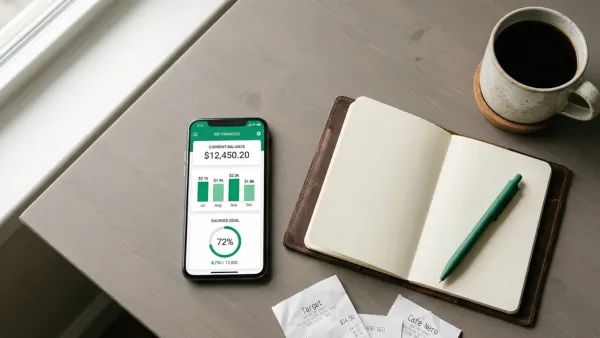
Tefteri is a personal finance app for iPhone that helps you track expenses, income, and subscriptions — organized by domain categories, stored locally on your device with no bank linking required. Seeing exactly where inflation is hitting your specific budget is the first step to responding to it effectively.
Frequently Asked Questions
What is the US inflation rate in 2026?
The March 2026 CPI showed annual inflation at 3.3%, with a month-over-month increase of 0.9% — the largest single-month jump since June 2022. Energy costs rose 10.9% year-over-year, grocery prices rose 4.1%, and rent rose 5.6% for renewing tenants. The next reading (April 2026 CPI) is scheduled for release on May 12, 2026.
How much more is inflation costing the average household per month?
Based on BLS median household spending data, the average American household is spending approximately $200–$250 more per month than in early 2025 on the same basket of goods. Households that rent their home and own a vehicle are typically experiencing $280–$350 in additional monthly costs, since rent renewals and car insurance — both heavily inflated — hit them simultaneously.
Which spending categories have risen the most in 2026?
The largest year-over-year increases as of March 2026 are: car insurance (+11.3%), energy and electricity (+10.9%), rent for renewing tenants (+5.6%), groceries (+4.1%), and dining out (+3.8%). Car insurance is the most underreported pain point — many households absorb the annual renewal increase without flagging it as inflation.
Should I update my budget limits because of inflation?
Yes. A budget built on 2024 or early 2025 prices understates your real cost of living in 2026. Rather than continuously “going over budget” in categories that have genuinely risen, update your spending ceilings to reflect today’s prices — then identify one discretionary area to cut to balance the increase. The goal is accuracy and intentionality, not self-deprivation.
Is now a good time to keep money in a savings account?
Yes. High-yield savings accounts at online banks — Ally, SoFi, Marcus by Goldman Sachs, Capital One 360 — are currently paying 4.5–5.0% APY. That is above the 3.3% inflation rate, meaning cash in a high-yield account earns a positive real return. This is significantly better than a traditional bank checking account paying near-zero interest, where inflation silently erodes purchasing power every month.