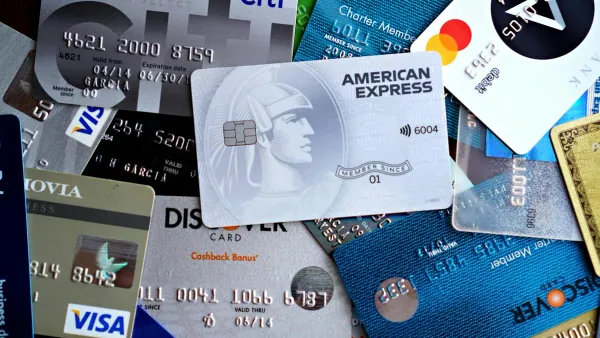
After the Fed raised its target range to 3.75–4% on September 16, 2026, the answer to “what should I do with my debt?” is: spend 30 minutes listing every variable-rate balance (credit cards, HELOCs, adjustable-rate mortgages, some personal and student loans), find each APR and reset date, and send extra cash to the highest rate first. Fixed-rate debt does not change, so it can wait.
Why a Fed Rate Hike Hits Your Wallet
This was the Fed’s first hike since 2023, and officials have signaled another before year-end. Most variable APRs are pegged to the prime rate, which moves in lockstep with the federal funds rate. A quarter-point hike adds 0.25 percentage points to those APRs within one or two billing cycles.
Forbes Advisor put the average credit card rate near 24.9% in late September. Meanwhile the 30-year fixed mortgage sits around 7.4%, and personal loan APRs commonly run 15–20%. Higher rates are not abstract; on a $6,000 card balance, one extra quarter-point costs roughly $15 more a year.
The 30-Minute Debt Audit
Minutes 1–10: List every debt
Pull up your Chase, Capital One, Discover or Bank of America apps and your loan servicers. For each debt, write down:
- Balance
- APR and whether it is fixed or variable
- Minimum payment
- Next reset date (for ARMs and HELOCs)
Minutes 10–20: Sort by type
| Debt type | Reacts to Fed hikes? | Typical rate now |
|---|---|---|
| Credit card | Yes, within 1–2 billing cycles | ~21–25% |
| HELOC | Yes, tied to prime | ~8–10% |
| ARM mortgage | At the next reset | Varies |
| Private student loan (variable) | Yes | Varies |
| Federal student loan | No, fixed | Fixed at origination |
| Auto loan, fixed-rate mortgage | No | Fixed |
Minutes 20–30: Decide your next move
- Credit cards first. At roughly 25%, a card is the most expensive debt most households carry. Use the avalanche method and put every spare dollar on the highest APR.
- Ask for a lower rate. Call the issuer; a retention rate is sometimes available, especially with on-time history.
- Consider a 0% balance transfer only if the fee (usually 3–5%) is lower than the interest you would pay during the promo window, and you will actually clear the balance in time.
- Check your ARM or HELOC reset date. If it lands in the next six months, get a quote for refinancing or fixing the rate.
- Keep your emergency fund. Do not drain it to pay a card; a surprise bill would simply go back on the card.
For a deeper look at the card side, see our credit card debt reality check.
What the Numbers Look Like in a Real Budget
Take a household with $8,000 on cards at 25%, a $20,000 personal loan at 16% and a $30,000 HELOC at 9%. Monthly interest alone is roughly $167 + $267 + $225 = about $660. Each quarter-point hike adds only a few dollars to each line, but the cards and HELOC together add about $8 a month, and that is before any second hike.

The point of the audit is not to chase pennies. It is to know which of those three lines to attack first (the cards) and whether the HELOC needs a plan before the next move.
Make the Audit Stick With a Monthly Total
A one-time audit fades. What keeps it working is seeing your debt payments as one number every month. In Tefteri you can add each payment as a recurring entry, with credit cards, the personal loan and the HELOC each under its own name, and watch the monthly total change when a rate reset bumps a payment. Everything stays on your iPhone, with no credit-score app or bank connection required.
Pair that with a simple review rhythm: check your list after every Fed meeting and every statement that shows an APR change. If inflation is squeezing the rest of your budget, our guide to inflation budget adjustments helps you find room.
Common Mistakes After a Rate Hike
- Ignoring the “variable” label on a promo APR that is about to expire.
- Paying only the minimum while rates rise, so the balance barely moves.
- Moving savings into a card payoff and leaving no cushion before the holidays.
- Opening new credit right before applying for a mortgage or refinance.
- Skipping the tax angle: HELOC interest is generally deductible only if used for home improvements, so check IRS guidance before assuming it helps.
Frequently Asked Questions
Will my credit card APR go up after a Fed hike?
Most likely yes. Variable card APRs follow the prime rate, so a 0.25-point hike usually shows up in your APR within one or two billing cycles. Your cardholder agreement lists the margin over prime.
What should I pay off first when interest rates rise?
Pay off the highest-APR variable debt first, which is typically a credit card. After that, tackle personal loans and HELOCs, then lower-rate fixed debt like auto loans.
Does a Fed rate hike affect my fixed-rate mortgage?
No. A fixed-rate mortgage keeps the same payment for the life of the loan. Only new mortgages and adjustable-rate loans respond to rate changes.
Should I do a balance transfer now?
Only if the transfer fee plus any post-promo APR is cheaper than what you pay today, and you can realistically pay off the balance within the promo period. Run the math before you apply.
How often should I review my debt?
Quarterly at minimum, and after every Fed meeting when rates are moving. A 30-minute check four times a year is usually enough.
Tefteri is a personal finance app for iPhone that helps you track debt payments, bills and spending, with your data staying private on your device.